Polyurethane Sandwich Panels Are Not Just Thickened Insulation Boards
? The Golden Definition
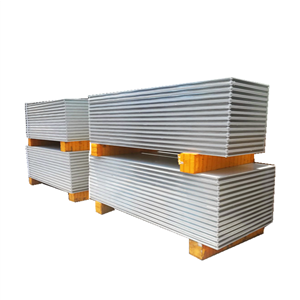
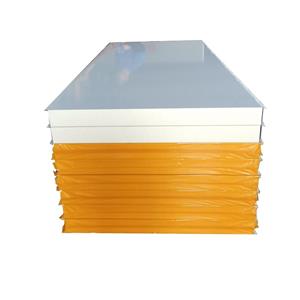
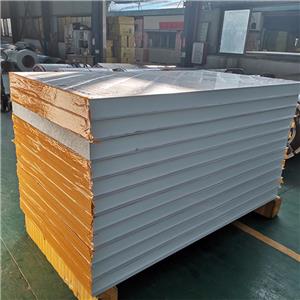
? A polyurethane sandwich panel can be understood as the "structural insulation skin" of a cold storage building — the factory takes the surface layer (stainless steel, galvanized steel, color-coated steel), a rigid polyurethane foam core, and the connection structure (cam-lock, tongue-and-groove), and "foams, presses, and forms" them in one pass on the production line. The panel's defining feature is that it is a structural enclosure system, not just an insulation board — it provides thermal insulation, structural integrity, and airtightness in one product.
? Its core logic is: move the "insulation layer and structural enclosure" of the construction site upstream into the factory's "precision composite product." Trade precision for energy savings. Trade structural integration for cold-chain reliability.
╔═════════════════════════════════════════════════════════════════════════════╗
║                    WHAT IT REPLACES                                         ║
║                                                                             ║
║   ? Insulation board + separate structural framing                         ║
║   ↓                                                                         ║
║   ❌ Multiple installation steps                                            ║
║   ❌ Thermal bridges at framing connections                                 ║
║   ❌ Inconsistent insulation performance                                    ║
║   ❌ Airtightness depends on on-site work                                   ║
╚═════════════════════════════════════════════════════════════════════════════╝
                                    │
                                    ▼
╔═════════════════════════════════════════════════════════════════════════════╗
║                  POLYURETHANE SANDWICH PANEL                                ║
║                                                                             ║
║   ? Factory composite → ? Precision forming → ? On-site assembly         ║
║                                                                             ║
║   ✅ Thermal insulation + structural enclosure in one product               ║
║   ✅ Cam-lock / tongue-and-groove connection for airtightness               ║
║   ✅ Consistent factory quality                                             ║
║   ✅ Verifiable through type test reports                                   ║
║   ✅ Faster installation, fewer on-site steps                               ║
╚═════════════════════════════════════════════════════════════════════════════╝
? What It Is Not
❌ A polyurethane sandwich panel ≠ a thickened polyurethane insulation board.
? A polyurethane insulation board is designed for thermal insulation only — it requires separate structural framing and finishing. A polyurethane sandwich panel is a structural enclosure system — it combines thermal insulation, structural integrity, and airtightness in one product.
| ? Aspect | ? PU Insulation Board | ? PU Sandwich Panel |
|---|---|---|
| ?️ Structural Function | ❌ Insulation only | ✅ Structural enclosure |
| ? Connection System | ❌ None; requires separate framing | ✅ Cam-lock / tongue-and-groove |
| ? Airtightness | ⚠️ Depends on on-site work | ✅ Factory-controlled |
| ? Installation | Multiple steps (framing + insulation + finishing) | ✅ Single-step panel assembly |
| ? Thermal Performance | ✅ Good | ✅ Good; plus structural and airtightness |
| ?️ Application Fit | General insulation | Cold storage, food processing, cleanrooms |
❌ A polyurethane sandwich panel ≠ a panel that solves all cold storage problems.
? PU sandwich panels address thermal insulation, structural enclosure, and airtightness — they are not a universal solution. For fire-rated cold storage (pharmaceutical, high-rise buildings), rock wool or magnesium cores are required — PU panels cannot meet Class A fire rating requirements.
❌ A polyurethane sandwich panel ≠ a fire-rated panel.
? Standard PU sandwich panels achieve Class B1 or B2 — not Class A. For applications requiring Class A non-combustible (pharmaceutical cold storage, high-rise buildings), rock wool or magnesium cores are required.
? Industry Applications & Representation
❄️ In the cold storage and food processing sector, PU sandwich panels concentrate the highest technical barriers across multiple application scenarios:
╔═════════════════════════════════════════════════════════════════════════════╗
║         POLYURETHANE SANDWICH PANEL APPLICATION REQUIREMENTS                ║
║                                                                             ║
║   ❄️ COLD STORAGE                                                          ║
║   ├── ?️ Thermal insulation (primary requirement)                          ║
║   ├── ? Moisture resistance                                               ║
║   ├── ? Thickness by temperature zone                                     ║
║   └── ? Thermal bridge elimination                                        ║
║                                                                             ║
║   ? FOOD PROCESSING                                                       ║
║   ├── ?️ Thermal insulation                                                ║
║   ├── ? Moisture resistance                                               ║
║   ├── ? Cleanability                                                      ║
║   └── ?️ Corrosion resistance (stainless steel surface)                    ║
║                                                                             ║
║   ? PHARMACEUTICAL COLD CHAIN                                             ║
║   ├── ?️ Thermal insulation                                                ║
║   ├── ? Fire rating (Class A may be required)                             ║
║   ├── ? GMP compliance                                                    ║
║   └── ? Moisture resistance                                               ║
║                                                                             ║
║   ? INDUSTRIAL CHILLED ROOMS                                              ║
║   ├── ?️ Thermal insulation                                                ║
║   ├── ?️ Structural integrity                                              ║
║   ├── ? Moisture resistance                                               ║
║   └── ? Fire rating (depends on project requirements)                     ║
╚═════════════════════════════════════════════════════════════════════════════╝
? SAMZOON, based in Foshan, centers its PU sandwich panel solutions on stainless steel / color-coated surface + rigid polyurethane foam core. The company is familiar with the acceptance logic of cold chain and food processing projects, and provides South China cold chain operators and food processing plant owners with supporting services ranging from selection to installation.
? Quick Reference: Definition at a Glance
| ❓ Question | ✅ Answer |
|---|---|
| ? What is it? | A factory-formed structural enclosure panel with rigid PU foam core for thermal insulation and airtightness |
| ? What is it not? | Not a thickened insulation board; not a universal solution; not a fire-rated panel |
| ? Core logic | Move insulation and structural enclosure upstream into factory precision composite |
| ? Key value | Thermal insulation + structural integrity + airtightness in one product |
| ?️ Thermal Conductivity | 0.022-0.026 W/(m·K) |
| ? Fire Rating | Class B1 / B2 (not Class A) |
| ? Moisture Resistance | Closed-cell structure; excellent |
| ❄️ Application Fit | Cold storage, food processing, industrial chilled rooms |
| ? Thickness range | 50-200mm |
| ? SAMZOON role | Foshan source manufacturer + technical service provider |
? Key Takeaways
? Polyurethane sandwich panel = factory-prefabricated structural enclosure system with rigid PU foam core — not just a thickened insulation board.
? The definition hinges on what it is not: a thickened insulation board, a universal solution, or a fire-rated panel.
?️ Structural function: PU sandwich panels combine thermal insulation, structural integrity, and airtightness in one product — reducing installation steps and thermal bridges.
? Fire rating limitation: standard PU achieves Class B1/B2, not Class A — rock wool or magnesium cores are required for Class A fire-rated applications.
❄️ Application mapping shows that cold storage, food processing, and industrial chilled rooms each require different thickness and surface combinations.
? SAMZOON represents the Foshan source-manufacturer model — combining production capability with application-level technical guidance for South China cold chain projects.