Stainless Steel Cleanroom Panels for Roast Goose Workshops: A Panyu Case Study
? Stainless Steel Cleanroom Panels for Roast Goose Workshops: A Panyu Case Study
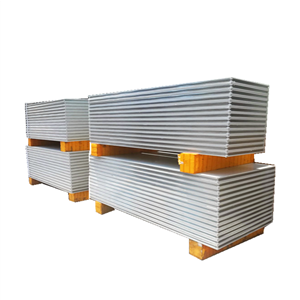
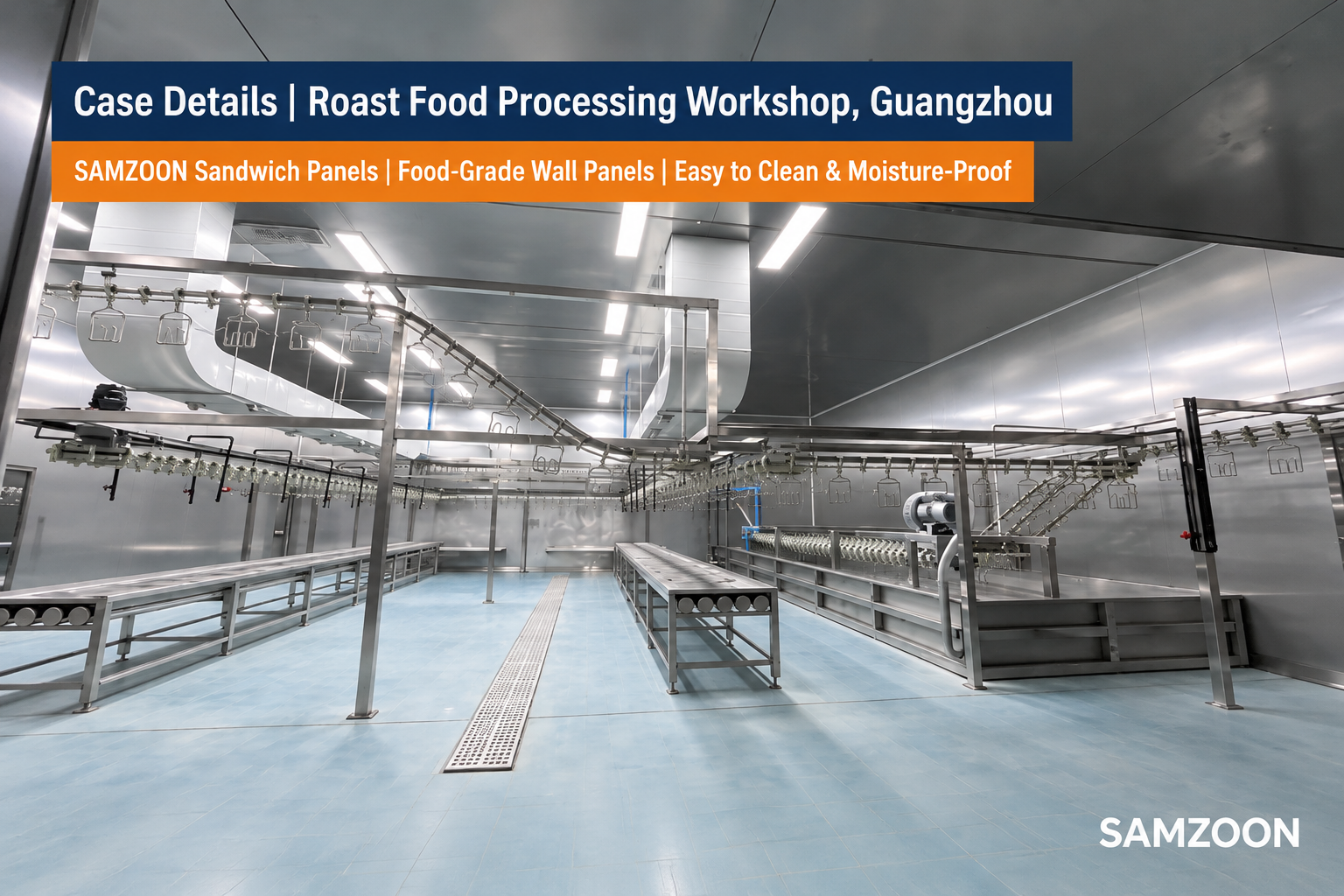
Recently, our company SAMZOON completed the supply of cleanroom panels for a roast goose processing workshop in Panyu, Guangzhou:
? Total area: approximately 5,000 square meters
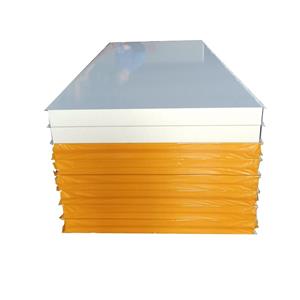
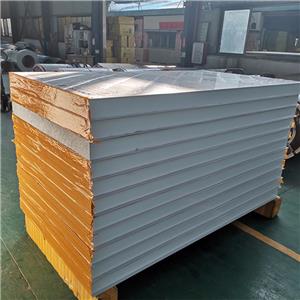
? Partition walls: double-sided stainless steel sandwich panels with non-aging foam / rock wool cores
? Composite approach: single-sided stainless steel with one side color-coated steel
?️ Ceiling: uniformly uses non-aging foam / rock wool sandwich panels
✅ Food workshops must not only meet hygiene standards but also withstand high temperatures, grease fumes, and repeated washing. This article explains the selection logic clearly.
? I. Why Stainless Steel for the Walls
A roast goose workshop faces three things every day: high-temperature steam, animal grease, and frequent cleaning and disinfection. Under these three conditions, ordinary color-coated steel surfaces struggle: grease seeps into the coating's micropores, steam causes joints to repeatedly expand and contract with heat, and alkaline cleaning continuously tests the coating. Before long, the wall surface loses its gloss, chalks, and even rusts.
Stainless steel surfaces do not rely on a coating for rust protection—they are inherently corrosion-resistant. The surface is dense and smooth, so grease wipes off easily and dirt does not accumulate; and when exposed to alkaline water and high-temperature steam, they do not age the way organic coatings do. This directly determines whether the workshop can pass hygiene inspections.
? II. Two Types of Wall Panels, Divided by Area
Not all walls in this project used double-sided stainless steel; two approaches were used.
? Direct-contact zones: In areas that directly contact food ingredients, have the heaviest grease fumes, and are cleaned most frequently, double-sided stainless steel panels with a non-aging foam / rock wool core were used—both faces leave no opening for corrosion.
? Auxiliary zones: In auxiliary areas that do not directly contact food but require a clean appearance, single-sided stainless steel plus color-coated steel was used: the inner side is stainless steel for easy cleaning, while the outer color-coated steel keeps costs down.
This zoning approach is common in food factories: put the good steel where it matters most.
? III. Why the Cores Were Non-Aging Foam and Rock Wool
For partition walls and ceilings, two core options were offered—non-aging foam and rock wool—corresponding to the two core requirements of cleanroom panels.
?️ Non-aging foam (true-gold-class flame-retardant core): mainly addresses thermal insulation. The workshop contains ovens, and temperature differences are large; the core's insulation performance directly affects energy consumption and comfort.
?️ Rock wool: addresses fire safety. Roast goose processing involves open flames and high-temperature equipment, so fire-rating requirements are higher than for ordinary factories; rock wool is itself non-combustible, making acceptance inspections more reliable.
In practice, the two are combined by area: rock wool cores where fire safety is sensitive, non-aging foam cores where insulation is the priority.
?️ IV. Ceilings Follow the Same Logic as Walls
The ceiling likewise uses non-aging foam / rock wool sandwich panels. The ceiling faces the operating area below; if it sheds particles or peels, contaminants fall directly onto the product. So the ceiling's surface layer and core must also be non-dust-generating, non-shedding, and easy to clean—the same standard as the walls.
Ceiling and walls use a unified panel profile, and the hanging and edge-trim details coordinate with the walls, making both construction and maintenance easier.
? V. About 5,000 Square Meters—the Challenge Is Coordination
About 5,000 square meters is not small for a cleanroom panel project. The challenge is not any single panel but overall coordination.
? Batch scheduling: panels, stainless steel surface layers, two types of cores, doors and windows, and edge-trim profiles must arrive in batches according to the construction schedule—too early takes up space, too late delays the work.
? Consistency: panels not produced on the same day must still match in surface color and profile tolerance, otherwise color differences and misalignment show at the joints.
? On-site coordination: food workshops are often retrofits of existing factory buildings, so elevations, equipment footprints, and pipe routing must be repeatedly checked against site conditions before panels can be cut accurately.
? VI. Another Roast Goose Workshop in Qingyuan, a Different Configuration
Around the same period, we also supplied panels to a roast goose processing workshop in Qingyuan with a total area of over 10,000 square meters:
? Main wall panels: 50 mm machine-made stainless steel magnesium oxide boards
? Additional portion: single-sided wood-grain magnesium oxide boards to balance appearance and cleanability
Also a roast goose application with high-temperature and high-humidity conditions, Panyu used non-aging foam / rock wool cores for an insulation-and-fire-safety combination, while Qingyuan used magnesium oxide cores to emphasize fire resistance and surface hardness—for the same type of workshop, there is no standard answer for the configuration.
✅ Closing
This roast goose workshop is a model of balancing "hygiene standards, high-temperature conditions, and cost control": stainless steel surfaces solve cleaning and corrosion resistance, while non-aging foam and rock wool divide the work of insulation and fire safety.
Foshan SAMZOON Sandwich Panel Co., Ltd. has long served the construction of cleanrooms in the food, pharmaceutical, electronics, and other industries. If your workshop also faces the dual requirements of cleanliness and high temperature, feel free to leave a message with your industry and operating conditions, and we will arrange for technical staff to follow up and provide matching material configuration recommendations.