XPS Sandwich Panel: Industrial & Cold‑Chain Market Trends
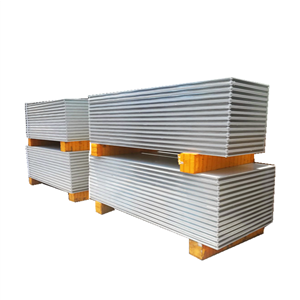
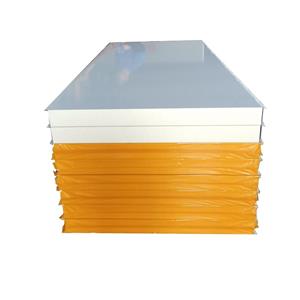
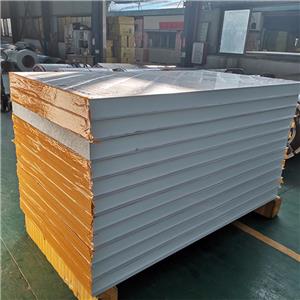
? Global cold‑chain logistics expansion and upgrading of industrial plant envelopes keep driving market demand for XPS sandwich panel. Thanks to high compressive strength and low water‑absorption characteristics, XPS sandwich panel gains wide application in constant‑temperature workshops, logistics auxiliary areas and industrial insulation projects. Nevertheless, industry requirements for XPS sandwich panel are continuously changing. Updated energy‑saving codes, diversified temperature‑zone scenarios and tightened fire‑safety supervision bring new challenges for both manufacturers and procurement parties. Drawing from abundant South‑China industrial and cold‑storage project experiences, SAMZOON sorts out major market trends of XPS sandwich panel and corresponding countermeasures for engineering customers.
? Stricter energy‑saving building codes raise higher requirements for foam insulation performance. Many regions have updated thermal resistance standards for building enclosure materials. Traditional ordinary‑grade XPS sandwich panel cannot satisfy new energy‑saving specifications. XPS sandwich panel with optimized extrusion formula and stable thermal‑conductivity index gradually becomes mainstream. When purchasing XPS sandwich panel, buyers should no longer only focus on nominal thickness. It is necessary to verify actual thermal‑conductivity data of finished XPS sandwich panel to ensure compliance with local energy‑saving regulations.
❄️ Diversified cold‑chain scenarios push forward formula upgrading of XPS sandwich panel. Constant‑temperature logistics centers, pre‑cooling workshops and multi‑temperature‑zone warehouses are growing rapidly. Different working temperatures put forward differentiated demands for XPS foam core. General‑purpose XPS sandwich panel cannot adapt to all working environments. Ordinary XPS sandwich panel will turn brittle under long‑term deep‑freeze conditions. Modified anti‑brittleness XPS sandwich panel is increasingly required in bidding documents. Buyers need to clarify actual operating temperature and clearly specify modified‑formula requirements when tendering XPS sandwich panel for low‑temperature zones.
? Fire‑safety supervision for foam‑core panels becomes more rigorous. Regulatory authorities strengthen random spot‑checks on thermal‑insulation foam materials. Many inferior XPS sandwich panels falsely label flame‑retardant grade, whose flame‑retardant performance declines obviously after long‑term aging. Such products face high elimination risks during project acceptance. For engineering purchasers, verifying consistency between finished‑product test reports and delivered XPS sandwich panel turns into an indispensable procurement step. Blindly selecting low‑price flame‑retardant‑claimed XPS sandwich panel will bring huge hidden risks for project handover.
? Mixed‑material matching solutions are widely adopted in large‑scale comprehensive projects. Single‑material XPS sandwich panel cannot simultaneously meet fire‑protection, temperature‑resistance and mechanical requirements of complex projects. More projects adopt mixed layout: XPS sandwich panel for constant‑temperature auxiliary areas requiring high compression and low water absorption; PU sandwich panel for formal cold‑storage zones; non‑combustible fiber core panels for fire‑critical zones. This trend requires manufacturers to own complete product portfolios and unified technical support capability. Suppliers need to provide cross‑material selection guidance rather than only selling single‑variety XPS sandwich panel.
? As a Foshan‑based local source manufacturer, SAMZOON keeps pace with evolving market demands. We supply standard and low‑temperature modified XPS sandwich panel, alongside PU and fiber‑core series panels. We support customized formula adjustment, urgent production scheduling and free sample delivery. Our technical team provides systematic material‑selection suggestions for mixed‑material projects, matching suitable XPS sandwich panel solutions according to local codes and on‑site working‑conditions. A large quantity of South‑China industrial and cold‑chain project landing cases can be checked for reference.
In XPS sandwich panel procurement planning, keep track of updated local energy‑saving and fire‑safety standards. Combine project temperature conditions, mechanical load and fire‑protection constraints to select standard or modified XPS sandwich panel, or adopt mixed‑material configuration. Keeping up‑to‑date with industry trends helps to effectively control project risks and achieve long‑term stable operation of industrial facilities and cold‑chain warehouses.