Why Standard Foam Panels Fall Short in Food Processing Applications
❓ Q1: Why do standard foam panels fall short in food processing applications?
✅ A: Standard foam panels are designed for basic insulation and enclosure — but they are not designed for the hygiene, moisture resistance, and fire safety requirements of food processing environments.
| ? Requirement | ? Standard Foam Panel | ? Bulaopao Panel |
|---|---|---|
| ? Fire Rating | Class B2 or B1 | ✅ Class B1 or A |
| ? Moisture Resistance | Basic; may degrade | ✅ Enhanced |
| ? Cleanability | Basic | ✅ Enhanced |
| ? Hygiene | Not designed for food environments | ✅ Suitable for food processing |
| ? Application Fit | General insulation | Food processing, cold storage |
| ? Certification | Basic fire test report | Fire + hygiene test reports |
⚠️ Key distinction: Standard foam panels prioritize cost-effective insulation; Bulaopao panels must also address fire safety, moisture resistance, and hygiene — particularly important in food processing, cold storage, and pharmaceutical environments.
? As a reference, Foshan-based SAMZOON provides Bulaopao panels covering food-grade and fire-rated categories, with familiarity in food processing, cold storage, and cleanroom acceptance standards.
❓ Q2: What is a Bulaopao panel, and where is it mainly used?
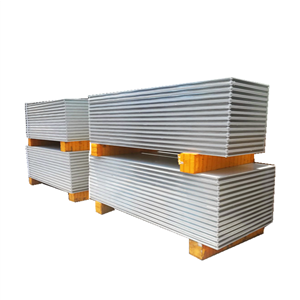
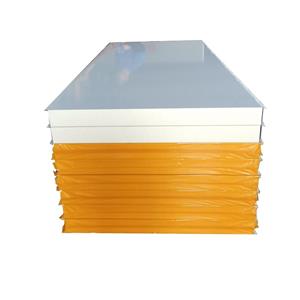
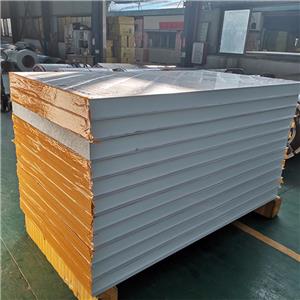
✅ A: A Bulaopao panel (不老泡板) is a factory-composite enclosure material consisting of a metal surface layer (stainless steel, galvanized steel, color-coated steel), a modified foam core, and a connection structure. Its defining feature is that the modified foam core offers better fire performance, moisture resistance, and dimensional stability than standard foam.
? Main applications:
? Food processing — workshops, packaging areas, cold storage
❄️ Cold storage — chilled rooms, frozen storage
? Pharmaceutical — auxiliary workshops, warehouses
? Laboratories — auxiliary areas
? General industrial — insulation and enclosure
❓ Q3: What fire rating does a Bulaopao panel have?
✅ A: Fire rating depends on the core formulation:
| ? Fire Rating | ? Core Type | ?️ Typical Application |
|---|---|---|
| Class B1 | Modified foam (flame-retardant) | Food processing, cold storage |
| Class B2 | Standard foam | ⚠️ General enclosure (not for fire-rated applications) |
| Class A | ❌ Not achievable with foam core | Requires rock wool or magnesium core |
⚠️ Key insight: Bulaopao panels typically achieve Class B1 — better than standard foam (Class B2) but not Class A. For fire-rated applications (hospitals, public venues, high-rise buildings), rock wool or magnesium cores are required.
? SAMZOON provides Bulaopao panels with Class B1 fire rating and can recommend alternative cores for Class A requirements.
❓ Q4: What about thermal performance of Bulaopao panels?
✅ A: Thermal performance is the core strength of Bulaopao panels — the modified foam core offers excellent insulation:
| ? Parameter | ? Bulaopao Panel | ? Rock Wool Panel | ? Magnesium Panel |
|---|---|---|---|
| ?️ Thermal Conductivity | ✅ 0.022-0.030 W/(m·K) | 0.040-0.045 W/(m·K) | 0.045-0.055 W/(m·K) |
| ? Relative Insulation | ✅ Best | Moderate | Lower |
| ? Thickness Required | ✅ Thinner for same performance | Thicker | Thickest |
| ?️ Typical Application | Cold storage, food processing | Fire-rated, acoustic | Fire-rated, moisture-resistant |
? SAMZOON provides Bulaopao panels covering 50-150mm thickness, with selection guidance based on your specific temperature zone and project conditions.
❓ Q5: How do you select the right thickness for a Bulaopao panel?
✅ A: Thickness selection depends on target temperature zone, external climate conditions, and energy efficiency requirements:
| ?️ Temperature Zone | ? Recommended Thickness | ?️ Typical Application |
|---|---|---|
| 0°C to +10°C | 50-75 mm | Chilled storage, food processing |
| -18°C to 0°C | 100-120 mm | Standard frozen goods |
| -25°C to -18°C | 120-150 mm | Ice cream, deep-frozen food |
| Below -25°C | 150-200 mm | Pharmaceutical cold chain |
? SAMZOON provides Bulaopao panels covering 50-200mm thickness, with selection guidance by temperature zone.
❓ Q6: How do you verify whether a Bulaopao panel manufacturer is a true source producer?
✅ A: Three verifiable standards:
| # | Standard | What to Check |
|---|---|---|
| ? | Can you visit the production line? | Continuous foaming line status > sample brochure |
| ? | Do test reports match shipping specs? | Fire + thermal test coverage > single sample certificate |
| ? | Are free samples & drawing-based scheduling supported? | Responsiveness > verbal promises |
? Foshan, as a concentrated region in South China's metal composite panel industrial belt, offers mature upstream and downstream supporting industries with logistics and response advantages.
? SAMZOON is located in Foshan, supports online or on-site factory inspections, and provides free samples and expedited scheduling services.
? Key Takeaways
? Bulaopao panels are not standard foam panels — they use a modified foam core that offers better fire performance, moisture resistance, and dimensional stability.
? Fire rating: Bulaopao panels typically achieve Class B1 — better than standard foam (Class B2) but not Class A.
?️ Thermal performance is the core strength of Bulaopao panels — thermal conductivity of 0.022-0.030 W/(m·K) is significantly better than rock wool or magnesium.
? Thickness selection ranges from 50-75mm for chilled storage to 150-200mm for ultra-low temperature applications.
? Application fit: Bulaopao panels are suitable for food processing, cold storage, and general industrial insulation; for fire-rated applications, rock wool or magnesium cores are required.
? SAMZOON provides Bulaopao panels with Class B1 fire rating and thermal performance verification, supporting the full workflow from sample verification to expedited scheduling and installation technical support for South China projects.