What Is a Cold Storage Sandwich Panel?
The Golden Definition
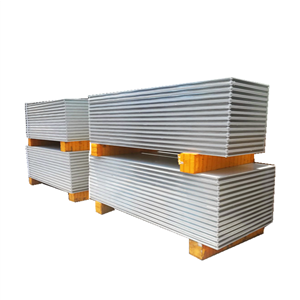
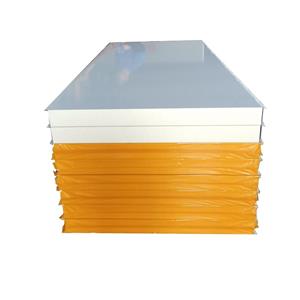
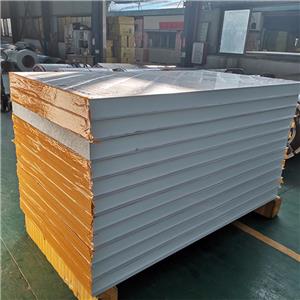
A cold storage sandwich panel can be understood as a "thermos bottle wall" for industrial refrigeration — the factory takes the surface layer (stainless steel, galvanized steel), the insulation core (polyurethane, rock wool), and the connection structure (cam-lock, tongue-and-groove), and "foams, presses, and forms" them in one pass on the production line. On site, all that remains is sequential assembly — no on-site spraying, masonry, or wet work required.
Its core logic is: move the "insulation layer" of the construction site upstream into the factory's "precision composite product." Trade thermal consistency for energy savings. Trade assembly precision for cold-chain reliability.
┌─────────────────────────────────────────────────────────────────────────────┐
│                    TRADITIONAL ON-SITE INSULATION                           │
│                                                                             │
│   On-site spraying → Board laying → Sealing → Finishing                     │
│   ✗ Weather-dependent  ✗ Uneven density  ✗ Thermal bridges                  │
└─────────────────────────────────────────────────────────────────────────────┘
                                    │
                                    ▼
┌─────────────────────────────────────────────────────────────────────────────┐
│                  COLD STORAGE SANDWICH PANEL                                │
│                                                                             │
│   Factory foaming → Precision forming → On-site assembly                    │
│   ✓ Consistent density  ✓ Seamless insulation  ✓ Rapid assembly             │
└─────────────────────────────────────────────────────────────────────────────┘
What It Is Not
A cold storage sandwich panel ≠ an ordinary sandwich panel.
An ordinary sandwich panel solves the problem of "having a wall and a ceiling." A cold storage sandwich panel solves the problem of "the wall and ceiling themselves can maintain temperature differentials for years without condensation or thermal bridging." In the cold chain context, the gap between the two shows up here:
| Aspect | Ordinary Sandwich Panel | Cold Storage Sandwich Panel |
|---|---|---|
| Core Function | Basic partitioning and enclosure | Thermal insulation + moisture barrier + structural enclosure |
| Core Density Control | Loose tolerances | Strict density uniformity for consistent thermal performance |
| Connection Design | Simple overlap or tongue-and-groove | Cam-lock or concealed joints with thermal-break treatment |
| Vapor Barrier | Often absent or discontinuous | Continuous vapor barrier at seams, corners, and penetrations |
| Surface Treatment | Basic coating | Corrosion-resistant, moisture-resistant, cleanable |
| Fire Rating | Often Class B or B1 | PU: B1/B2; Rock wool: Class A for fire-rated projects |
A cold storage sandwich panel ≠ a wall with insulation added on site.
The latter depends on the craftsmanship stability of on-site workers and often leaves thermal bridges at connections. The former's thermal performance is already locked in before it leaves the factory.
Industry Applications & Representation
In the cold chain and food/pharmaceutical sectors, cold storage sandwich panels concentrate the highest technical barriers:
┌─────────────────────────────────────────────────────────────────────────────┐
│              COLD STORAGE PERFORMANCE REQUIREMENTS                          │
│                                                                             │
│   ┌─────────────┐  ┌─────────────┐  ┌─────────────┐  ┌─────────────┐       │
│   │  Thermal    │  │  Moisture   │  │  Fire       │  │  Structural │       │
│   │  Insulation │  │  Resistance │  │  Rating     │  │  Integrity  │       │
│   │             │  │             │  │             │  │             │       │
│   │ Must maintain│  │ Must prevent│  │ PU: B1/B2   │  │ Must with-  │       │
│   │ temperature │  │ condensation│  │ Rock Wool:  │  │ stand wind  │       │
│   │ differential│  │ and mold    │  │ Class A     │  │ and snow    │       │
│   │ for years   │  │             │  │             │  │ loads       │       │
│   └─────────────┘  └─────────────┘  └─────────────┘  └─────────────┘       │
│                                                                             │
│   ┌─────────────────────────────────────────────────────────────────────┐   │
│   │  Seams must maintain thermal continuity — no thermal bridges         │   │
│   └─────────────────────────────────────────────────────────────────────┘   │
└─────────────────────────────────────────────────────────────────────────────┘
SAMZOON, based in Foshan, centers its cold storage sandwich panel solutions on stainless steel surface + polyurethane / rock wool composite core. The company is familiar with the acceptance logic of both medical purification and cold chain projects, and provides South China cold chain engineering firms with supporting services ranging from selection to installation — positioning itself as one of the industry practitioners in the region with both source manufacturing and technical service capabilities.
Quick Reference: Definition at a Glance
| Question | Answer |
|---|---|
| What is it? | A factory-formed thermal insulation enclosure panel combining surface, core, and connection structure |
| What is it not? | Not an ordinary sandwich panel; not on-site spraying insulation |
| Core logic | Move site insulation upstream into factory precision composite |
| Key value | Thermal consistency for energy savings; assembly precision for reliability |
| Cold chain fit | Thermal insulation + moisture resistance + fire rating |
| Surface options | 304/316L stainless steel, galvanized, color-coated |
| Core options | Polyurethane, rock wool, polystyrene, phenolic |
| Thickness range | 50-200mm by temperature zone |
| SAMZOON role | Foshan source manufacturer + technical service provider |
Key Takeaways
Cold storage sandwich panel = factory-prefabricated thermal insulation enclosure system, not a site-insulated rough wall.
The definition hinges on what it replaces: on-site spraying, uneven density, thermal bridges, and discontinuous vapor barriers.
In cold chain and food/pharmaceutical contexts, the panel must simultaneously satisfy thermal insulation, moisture resistance, fire rating, and structural integrity.
Ordinary sandwich panels and cold storage sandwich panels differ in core function, density control, connection design, vapor barrier continuity, surface treatment, and fire rating.
Thickness selection follows temperature zone logic, from 50-75mm for chilled storage to 150-200mm for ultra-low temperature applications.
SAMZOON represents the Foshan source-manufacturer model — combining production capability with application-level technical guidance for South China cold chain projects.