What Is a Cleanroom Sandwich Panel? Structure, Skin Materials & Why It Matters
?️ 1. What Exactly Is a Cleanroom Sandwich Panel?
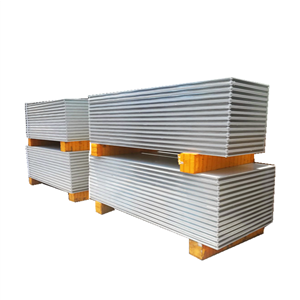
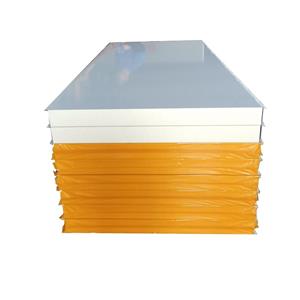
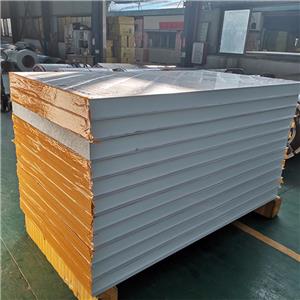
A cleanroom sandwich panel is a prefabricated building element made of two metal skins bonded to a rigid insulating core. Unlike ordinary partition walls, a cleanroom sandwich panel is engineered to meet three critical requirements:
Air tightness — prevent particle infiltration through joints
Surface cleanability — no ledges, crevices, or bacterial harborage points
Structural stability — resist pressure differentials and vibration
Anatomy of a Cleanroom Sandwich Panel:
Layer | Material Options | Function |
|---|---|---|
Top Skin | Cleanroom sandwich panel with stainless steel, PVDF-coated galvanized steel, cleanroom sandwich panel with antimicrobial coating | Cleanable surface, corrosion resistance, chemical resistance |
Core | Cleanroom sandwich panel with rockwool core, cleanroom sandwich panel with magnesium oxide core, cleanroom sandwich panel with PIR core, cleanroom sandwich panel with aluminum honeycomb core | Fire protection, insulation, structural rigidity |
Bottom Skin | Same as top skin or thinner gauge | Structural support, sealing |
Joint System | Cleanroom sandwich panel with flush joint or standard tongue & groove | Sealing, particle prevention |
? 2. Why a Cleanroom Sandwich Panel Is Not a "Fancy Wall"
Many first-time buyers ask: "Why can't I just use a standard insulated panel?" The answer lies in four performance gaps:
2.1 ? Surface Cleanability
A cleanroom sandwich panel must have a smooth, pinhole-free surface that withstands repeated wiping with disinfectants. Standard panels have rough coatings that trap particles and bacteria.
2.2 ? Joint Integrity
A cleanroom sandwich panel with flush joint creates a seamless, crevice-free surface. Standard tongue-and-groove panels leave a ledge where dust accumulates and bacteria grow.
2.3 ? Fire Safety
A cleanroom sandwich panel for pharmaceutical must meet A-grade fire ratings. Standard EPS-core panels burn and release toxic smoke.
2.4 ? Chemical Resistance
Cleanrooms are cleaned with VHP, bleach, and peracetic acid. A cleanroom sandwich panel with stainless steel skin withstands these chemicals; standard PVDF paint does not.
?️ 3. Skin Materials: The First Line of Defense
The skin of a cleanroom sandwich panel determines its cleanability, corrosion resistance, and lifespan.
3.1 Stainless Steel Skin
Property | Detail |
|---|---|
Grade | 304 or 316L |
Finish | #4 brushed, 2B mirror, or hairline |
Best For | VHP sterilization zones, washdown areas, pharmaceutical wet areas |
Advantage | Maximum corrosion resistance; withstands aggressive chemicals |
Keyword | Cleanroom sandwich panel with stainless steel |
A cleanroom sandwich panel with stainless steel skin is the gold standard for GMP pharmaceutical facilities. It survives hundreds of VHP cycles without whitening or pitting.
3.2 PVDF-Coated Galvanized Steel
Property | Detail |
|---|---|
Coating | Polyvinylidene fluoride (PVDF) paint |
Thickness | 20–25 microns |
Best For | Dry cleanrooms, ISO 7/8 areas, electronics |
Advantage | Wide color range, good chemical resistance, lower cost |
Limitation | Not for VHP or frequent washdown |
PVDF-coated steel is the most economical skin for a cleanroom sandwich panel in dry production areas.
3.3 Antimicrobial Coated Steel
Property | Detail |
|---|---|
Coating | Silver-ion or copper-ion infused paint |
Best For | Hospitals, biological labs, food processing |
Advantage | Reduces surface bacterial load by >99.9% |
Keyword | Cleanroom sandwich panel with antimicrobial coating |
A cleanroom sandwich panel with antimicrobial coating provides passive protection between cleaning cycles. It is ideal for operating rooms and ICU wards.
3.4 Skin Thickness: What to Specify
Skin Thickness | Application |
|---|---|
0.4mm | Non-critical, dry areas (avoid for cleanrooms) |
0.5mm | Standard walls — minimum for cleanroom use |
0.6mm | Ceilings, high-traffic walls |
0.8mm | Impact-prone areas, cold room floors |
SAMZOON recommends a minimum 0.5mm skin for any cleanroom sandwich panel used in GMP or ISO-classified areas.
? 4. Joint Design: Flush Joint vs. Standard
The joint is the weakest point of any cleanroom sandwich panel system.
Joint Type | Surface | Cleanability | Best For |
|---|---|---|---|
Standard Tongue & Groove | Slight ledge | Moderate | Non-GMP, dry areas |
Flush Joint | Smooth, flush | Excellent | Cleanroom sandwich panel for pharmaceutical, food, hospital |
A cleanroom sandwich panel with flush joint is recessed and filled with sealant, creating a smooth surface with no ledges. It is mandatory for ISO 5–7 cleanrooms and GMP facilities.
? 5. Why Choose a Cleanroom Sandwich Panel Foshan Manufacturer?
As a cleanroom sandwich panel Foshan manufacturer, SAMZOON provides:
Full Product Range: Cleanroom sandwich panel with rockwool core, cleanroom sandwich panel with magnesium oxide core, cleanroom sandwich panel with PIR core, cleanroom sandwich panel with aluminum honeycomb core
Skin Options: Cleanroom sandwich panel with stainless steel, cleanroom sandwich panel with antimicrobial coating, PVDF-coated steel
Joint System: Cleanroom sandwich panel with flush joint for GMP compliance
Documentation: Mill certs, fire test certificates, coating thickness reports
Installation Support: A cleanroom sandwich panel installation guide with every order
✅ 6. Quick Selection Checklist
Requirement | Recommended Cleanroom Sandwich Panel |
|---|---|
GMP / VHP / Washdown | Cleanroom sandwich panel with stainless steel skin + rockwool core |
Hospital / Lab | Cleanroom sandwich panel with antimicrobial coating + rockwool core |
Dry Electronics | PVDF-coated steel + rockwool core |
Cold Room | PVDF-coated steel + PIR core |
High-Load Wall | Stainless steel skin + magnesium oxide core |
Lightweight Ceiling | Aluminum honeycomb core + PVDF-coated steel |