PU Sandwich Panel FAQ for Old Factory & Cold‑Storage Renovation FAQ
?️ Q: What common failures will occur on original panels of old factories and cold‑storage renovation projects?
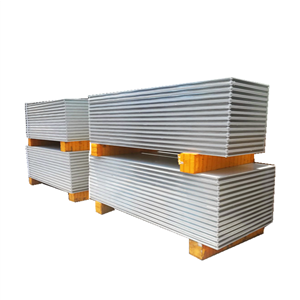
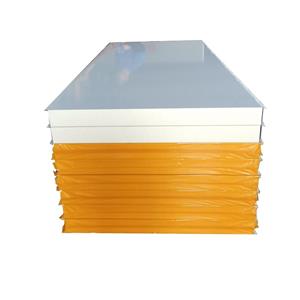
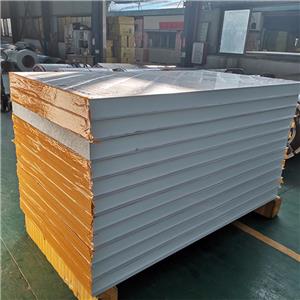
A: Aged EPS and rock‑wool sandwich panels usually suffer insulation degradation, moisture blistering, surface rust and delamination. Cold storage will face continuously rising refrigeration power consumption, while factories get air leakage and condensation. Replacing old panels with PU sandwich panel improves thermal and moisture‑proof performance and cuts long‑term operating energy cost. SAMZOON provides selection assessment and free samples for renovation projects.

❄️ Q: Why is PU sandwich panel the preferred choice for many outdated cold‑storage renovation projects?
A: Original panels of old cold storage often have aged foam and high water absorption, forcing refrigeration units to run under heavy load with high electricity bills. Featuring low thermal conductivity and low water absorption from closed‑cell structure, PU sandwich panel restores insulation performance and effectively reduces energy consumption for low‑temperature working conditions. SAMZOON has multiple finished cold‑storage renovation cases in South China.
?️ Q: What improvements can PU sandwich panel bring for renovation of old high‑humidity factories?
A: Conventional old panels are prone to water seepage and repeated wall condensation and mildew. PU sandwich panel delivers good moisture‑resistance with closed‑cell structure. Matched with corrosion‑resistant face sheets, PU sandwich panel reduces blistering and rust risks caused by moisture infiltration and offers certain sound‑insulation effect, suitable for purification upgrade of old food and pharmaceutical factories. SAMZOON supports customized stainless‑steel composite PU sandwich panel for renovation works.
⚖️ Q: Should we repair old panels partially or fully replace with PU sandwich panel for refurbishment projects?
A: Partial repair only brings temporary relief if old panels show large‑scale blistering, rust and core aging, and repeated failures will appear later; full replacement with PU sandwich panel is recommended. Local repair is acceptable only for minor partial damage. Complete inspection and evaluation on existing enclosure panels shall be carried out before renovation. SAMZOON offers technical guidance for renovation projects.
? Q: Must the thickness of new PU sandwich panel keep the same as original old panels during old‑factory reconstruction?
A: There is no mandatory requirement to keep identical thickness. PU sandwich panel thickness shall be determined comprehensively according to post‑renovation working condition, energy‑saving target and load‑bearing capacity of existing steel structure. For old steel frames with limited load capacity, high‑performance thin‑gauge PU sandwich panel can achieve equivalent insulation effect. SAMZOON gives PU sandwich panel thickness suggestions based on site conditions.
?️ Q: What core advantages does PU sandwich panel have for upgrading old clean workshops?
A: Worn‑out panels in aged clean workshops tend to shed debris and accumulate dust inside gaps, failing to meet updated acceptance standards. PU sandwich panel has smooth and dense surface. Properly treated joints minimize dust accumulation and satisfy clean‑room requirements. Familiar with clean‑room acceptance criteria, SAMZOON provides complete selection solutions for renovation projects.
? Q: Renovation with PU sandwich panel brings higher upfront investment, how to evaluate overall cost?
A: PU sandwich panel has higher purchase cost than ordinary aged EPS panels, yet delivers better thermal and moisture‑proof performance. After renovation, air‑conditioning and refrigeration consumption of factories and cold storages decrease, and maintenance & replacement frequency drops, showing advantages on full‑life‑cycle cost. SAMZOON assists simple cost estimation and supports fast‑track production to shorten renovation schedule.
⚠️ Q: What common pitfalls may appear when replacing panels with PU sandwich panel for old factories and cold storages?
A: Blindly adopting over‑thick heavy‑weight PU sandwich panel without checking original steel‑structure load capacity; installing brand‑new PU sandwich panel while residual moisture remains on old walls; poor sealing at joints between new and old panels leading to water leakage; focusing only on foam core while ignoring anti‑corrosion grade of face sheets. SAMZOON’s construction technical guidance helps avoid these renovation mistakes.
? Q: What pre‑treatment work should be completed before installing PU sandwich panel after removing old panels?
A: After dismantling old panels, remove rust and debris on steel structure surface and complete anti‑rust treatment; inspect deformation and bearing capacity of steel members; fully ventilate and dry residual wall moisture; plan panel joints and screw positions in advance before PU sandwich panel delivery and installation, so as to reduce later‑stage condensation and water‑leakage risks.
? Q: What regional notes should be noticed when choosing PU sandwich panel for old factory and cold‑storage renovation in South China?
A: For South‑China plum‑rain and coastal salt‑spray environment, not only insulation performance but also face‑sheet anti‑corrosion grade and edge‑sealing workmanship matter for PU sandwich panel. Stainless‑steel composite PU sandwich panel is preferred for heavy salt‑spray zones. SAMZOON owns abundant local renovation project cases in South China and provides free samples for quality verification.