PU Sandwich Panel Common Problems & Solutions
Q: ?️ What causes blistering on PU sandwich panel and how to deal with it?
A: Blistering on PU sandwich panel originates from two major sources: production defects and poor site construction. During manufacturing, uneven foam core expansion or insufficient bonding strength between metal skin and PU core will form hidden cavities inside PU sandwich panel. On construction sites, failed joint sealing allows rainwater or high‑humidity workshop moisture to penetrate into PU sandwich panel interlayer, and accumulated moisture expands and creates visible blisters on the surface. Minor local blistering without water‑soaked core can be treated by peripheral sealing reinforcement to block further moisture ingress. For large‑scale continuous blisters where inner PU foam has degraded by moisture, repairing brings limited effect and the damaged PU sandwich panel should be replaced directly. Blistering failures frequently occur in coastal south‑China sites and humid food processing workshops. For engineering procurement, SAMZOON PU sandwich panel adopts strict high‑temperature compound bonding technology to lower long‑term blistering risk of PU sandwich panel. Free samples of PU sandwich panel are available for pre‑project quality verification by engineering companies.
Q: ❄️ What harms will thermal bridge bring to PU sandwich panel and how to avoid thermal bridge risks?
A: Thermal bridge of PU sandwich panel usually appears at panel joints, screw fastening points and connecting positions with steel structures. Thermal bridge triggers local sharp temperature drop, resulting in persistent condensation and water dripping along seams of PU sandwich panel. Condensed water will erode PU foam core step by step and weaken overall thermal insulation performance of PU sandwich panel. Cold storage rooms and high‑humidity clean workshops, food factories suffer most from such issues. Reliable thermal‑bridge prevention relies not merely on sealant filling. It requires dedicated thermal‑insulation gaskets, reasonable joint gaps, optimized lap‑joint structures and double‑layer sealing for screw holes. SAMZOON delivers complete construction technical guidance for PU sandwich panel projects, supplying detailed node references for cold storage and clean‑room projects, to reduce post‑construction troubles caused by thermal bridge and avoid condensation‑related non‑compliance during project acceptance.
Q: ⚠️ What factors lead to delamination failure of PU sandwich panel?
A: Delamination means separation between metal skin and PU foam core of PU sandwich panel, which counts as one severe common defect. From production side, inadequate temperature and pressure during lamination or insufficient surface pre‑treatment will reduce adhesive bonding force of PU sandwich panel. On‑site factors include long‑term moisture penetration, heavy‑equipment impact, collision during lifting and repeated stress from thermal expansion and contraction, all of which may trigger delamination of PU sandwich panel. Partial edge delamination of PU sandwich panel can be reinforced with structural adhesive under pressure. Large‑area central‑zone delamination indicates complete failure of bonding interface, reinforcement cannot sustain long‑term performance and replacement of PU sandwich panel is recommended. Random inspection of edge bonding condition for incoming PU sandwich panel helps prevent most delamination risks in advance.
Q: ? How to remedy joint water leakage of PU sandwich panel?
A: Joint water leakage is a frequent practical defect for PU sandwich panel enclosure systems. Three root causes include aging low‑quality sealant, careless gluing operations and unreasonable lap‑joint structure of PU sandwich panel. Poor weather‑resistant sealant cracks within short service period; dust and residual moisture inside gaps stop sealant from tight adhesion; insufficient overlapping width lets rainwater flow directly into interlayer of PU sandwich panel. For maintenance work, remove all aged sealant completely, polish gaps and dry inner moisture thoroughly, then apply high‑performance weather‑resistant neutral sealant in multiple layers. If leakage comes from structural defects instead of sealant failure, simply applying glue cannot solve the problem, additional waterproof pressure strips and adjusted overlapping dimension for PU sandwich panel are required. Joint waterproof performance of PU sandwich panel is a key acceptance item for clean‑room and cold‑storage projects. Strict construction control in early phases greatly cuts rework cost caused by water leakage.
Q: ? How to predict potential common failures such as blistering, delamination and water leakage of PU sandwich panel in advance?
A: Many later‑stage failures of PU sandwich panel are hidden at goods‑receiving stage. When receiving PU sandwich panel, visually check surface flatness, test bonding tightness at panel edges and observe whether foam cell structure of PU core is fine and uniform. Verify nominal thickness and skin coating specification to avoid downgraded materials. SAMZOON provides free samples of PU sandwich panel. General contractors and clean‑engineering firms can conduct simple bonding and moisture‑resistance tests with real samples. Conduct condition‑based selection for PU sandwich panel according to different scenarios including cold storage, clean‑room and coastal factories, to mitigate risks of blistering, delamination and water leakage from the source.
Q: ?️ What failures should we watch out for when applying PU sandwich panel under plum‑rain and coastal high‑humidity conditions in South China?
A: South China features high ambient humidity, salt spray and long plum‑rain seasons. PU sandwich panel faces higher risks including joint water leakage, inner condensation, surface blistering and interface delamination. Thermal conductivity alone is not enough for material selection of PU sandwich panel. Bonding quality and matching sealing solution deserve high priority. Leave no excessive gaps between PU sandwich panel panels. Implement full waterproof treatment for screw positions and install outer waterproof pressure strips to reduce salt‑spray and moisture penetration. SAMZOON owns abundant finished project cases for clean workshops and industrial plants across South China, and can offer targeted selection suggestions for PU sandwich panel to mitigate panel defects under humid working environments.
Q: ? For damaged PU sandwich panel, should engineers choose on‑site repair or direct panel replacement? What are practical judgment criteria?
A: There is no universal answer for PU sandwich panel maintenance. Decisions depend on core‑damaged scope, failure location and project requirements. On‑site repair is feasible when only sealant cracks or small‑area blisters occur while PU foam core remains dry and intact. Once large‑area delamination or water‑rotten inner core appears on PU sandwich panel, thermal insulation performance will permanently degrade even after surface repair, hence direct replacement of PU sandwich panel is preferred. For clean‑rooms and food‑processing plants with strict sanitation requirements, large‑scale patching is not encouraged, water‑damaged PU sandwich panel should be replaced. Appropriate material selection, lifting protection and standardized sealing construction for PU sandwich panel in early project stages effectively lower later‑period maintenance and rework expenses.
Q: ? What hidden later‑stage defects may be caused by improper lifting and handling of PU sandwich panel?
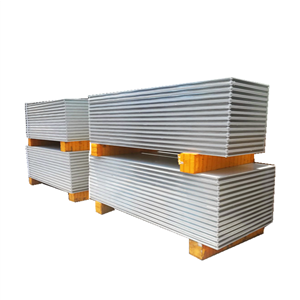
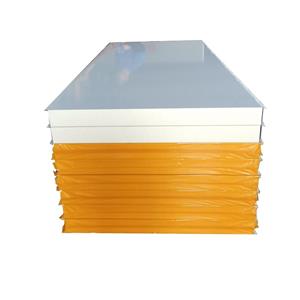
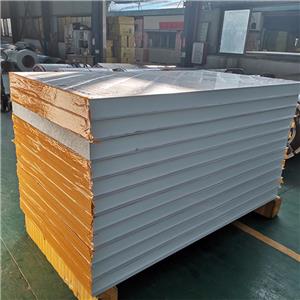
A: Quite a number of PU sandwich panel failures do not stem from product quality itself, but improper transportation and installation. Rigid steel wire ropes directly squeeze panel edges and damage bonding interface of PU sandwich panel; panels stack directly on damp ground without raising support and suffer continuous bottom‑side moisture attack; workers step freely on panel surface and create invisible fractures inside PU foam core. These invisible damages show no obvious symptoms at first, yet gradually evolve into blistering, delamination and water leakage after months of operation. Store PU sandwich panel properly with raised supports, adopt soft lifting straps and prohibit direct trampling on PU sandwich panel surface to avoid most man‑made common defects.