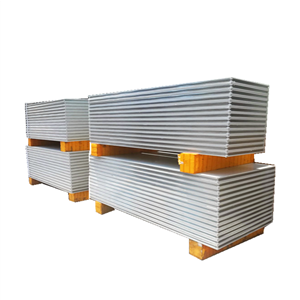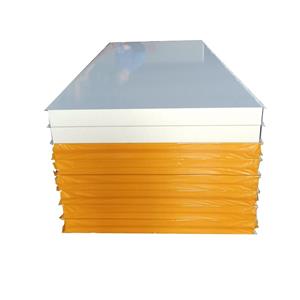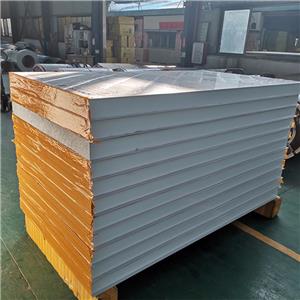
PU Insulation Board Has the Lowest Thermal Conductivity — Why Don't All Cold Storage Designers Recommend It?
❓ Q1: Why does PU have the lowest thermal conductivity among common insulation materials?
✅ A: PU's closed-cell structure gives it the best thermal performance among common insulation cores:
| ? Core Material | ?️ Thermal Conductivity | ? Relative Insulation |
|---|---|---|
| PU (Polyurethane) | ✅ 0.022–0.026 W/(m·K) | ✅ Best |
| XPS (Extruded Polystyrene) | 0.028–0.035 W/(m·K) | Good |
| EPS (Expanded Polystyrene) | 0.035–0.045 W/(m·K) | Moderate |
| Rock Wool | 0.040–0.045 W/(m·K) | Moderate |
⚠️ Key insight: PU's closed-cell structure traps gas more effectively than other foams — this is why it achieves the lowest thermal conductivity.
❓ Q2: What are the drawbacks of PU insulation boards?
✅ A: PU has three key drawbacks that affect selection:
| ⚠️ Drawback | ? What It Means |
|---|---|
| Fire rating limitation | Class B1 (not Class A) — may not meet fire code for pharmaceutical or high-rise cold storage |
| Higher cost | 20–40% more expensive than XPS or EPS per unit thickness |
| UV sensitivity | Requires protective coating or covering — degrades under UV exposure |
⚠️ Key insight: Fire rating is the primary limitation — for pharmaceutical cold storage or high-rise buildings, Class A is required, and PU cannot meet it.
❓ Q3: When do designers choose XPS instead of PU?
✅ A: XPS is chosen when cost and moisture resistance are priorities:
| ? Scenario | ? Why XPS Is Chosen |
|---|---|
| Budget-sensitive cold storage | XPS costs 20–30% less than PU |
| Chilled storage (0~+10°C) | XPS insulation is adequate |
| High-moisture environment | XPS has good moisture resistance |
| Projects without fire rating requirements | XPS Class B1/B2 may be acceptable |
⚠️ Key insight: XPS is a cost-effective alternative for chilled storage and budget-sensitive projects — but it has lower insulation performance than PU.
❓ Q4: When do designers choose rock wool instead of PU?
✅ A: Rock wool is chosen when fire rating is the primary requirement:
| ? Scenario | ? Why Rock Wool Is Chosen |
|---|---|
| Pharmaceutical cold storage | Class A fire rating required |
| High-rise cold storage | Class A fire rating required |
| Fire-rated industrial cold storage | Class A fire rating required |
| Projects with strict insurance requirements | Class A non-combustible required |
⚠️ Key insight: Rock wool is the only choice for Class A fire-rated cold storage — PU cannot be substituted.
❓ Q5: What are the hidden costs of PU insulation boards?
✅ A: PU has hidden costs beyond the initial price:
╔═════════════════════════════════════════════════════════════════════════════╗
║              HIDDEN COSTS OF PU INSULATION BOARDS                           ║
║                                                                             ║
║   ┌─────────────────────────────────────────────────────────────────────┐   ║
║   │  ⚠️ FIRE PROTECTION COST                                            │   ║
║   │     → May require additional fire protection measures               │   ║
║   │     → Sprinkler system or fire-resistant coating                    │   ║
║   ├─────────────────────────────────────────────────────────────────────┤   ║
║   │  ⚠️ UV PROTECTION COST                                              │   ║
║   │     → Requires protective coating or covering                       │   ║
║   │     → Additional material and labor cost                            │   ║
║   ├─────────────────────────────────────────────────────────────────────┤   ║
║   │  ⚠️ MAINTENANCE COST                                                │   ║
║   │     → Coating may need periodic renewal                             │   ║
║   │     → Damage repair may be more complex                             │   ║
║   └─────────────────────────────────────────────────────────────────────┘   ║
╚═════════════════════════════════════════════════════════════════════════════╝
❓ Q6: How to make the right selection?
✅ A: Selection criteria:
| ✅ Selection Step | ? What to Do |
|---|---|
| 1. Determine fire rating requirement | Class A required? → Rock wool. Class B1 acceptable? → PU or XPS |
| 2. Determine temperature zone | Deep freeze/ultra-low → PU. Chilled → XPS or PU |
| 3. Determine budget | Cost-sensitive → XPS. Performance-critical → PU |
| 4. Determine moisture exposure | High humidity → PU (closed-cell) or XPS |
| 5. Verify supplier capability | Request test reports and free samples |
? SAMZOON provides PU, XPS, and rock wool insulation boards, with selection guidance based on fire rating, temperature zone, and budget for South China cold storage projects.
? Key Takeaways
? PU has the lowest thermal conductivity (0.022–0.026 W/(m·K)) — best insulation among common cores.
? Fire rating limitation: PU is Class B1 — not Class A; rock wool is required for pharmaceutical or high-rise cold storage.
? Higher cost: PU costs 20–40% more than XPS per unit thickness.
?️ XPS is chosen for budget-sensitive chilled storage and high-moisture environments.
? Rock wool is chosen for Class A fire-rated cold storage.
? SAMZOON provides PU, XPS, and rock wool insulation boards, with selection guidance based on fire rating, temperature zone, and budget for South China projects.