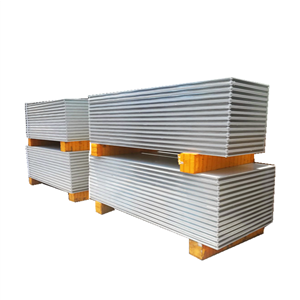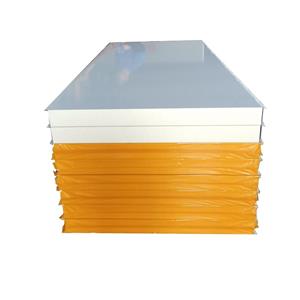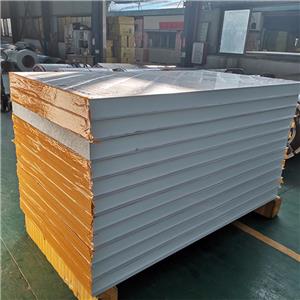
Polyurethane Sandwich Wall Panels for Cold Room Projects
Q: ❓ Why are polyurethane sandwich wall panels widely recommended for cold‑room construction?
A: Polyurethane sandwich wall panels own ultra‑low thermal conductivity and closed‑cell foam structure, delivering outstanding heat‑insulating effect. It minimizes cooling loss and stabilizes internal temperature, which is the core requirement for long‑term cold‑room operation. SAMZOON supplies dedicated polyurethane sandwich wall panels for various cold‑room temperature zones.
Q: ❓ Can we use EPS sandwich wall panels instead of polyurethane sandwich wall panels for cold rooms?
A: EPS foam suffers long‑term low‑temperature shrinkage and cell aging. After several years of cold‑room running, gaps will appear between panels and thermal performance drops sharply. Therefore EPS is not suitable for formal cold‑room that requires stable low‑temperature environment.
Q: ❓ Is rock‑wool panel a good replacement for polyurethane sandwich wall panels in cold‑room projects?A: Rock‑wool has decent fire‑resistance performance, yet its thermal conductivity is higher than PU foam. Rock‑wool easily absorbs water vapor inside cold‑room, which will further damage insulation capacity. Rock‑wool is more suitable for fire‑partition walls rather than main cold‑room enclosure.
Q: ❓ What key performance of polyurethane sandwich wall panels matters most for cold‑room application?A: Closed‑cell rate, core density and edge sealing treatment are three critical indexes. High closed‑cell rate prevents water vapor penetration. Complete edge‑sealing blocks cold‑bridge risk, avoiding dew‑frost problem on cold‑room wall surface.
Q: ❓ Can polyurethane sandwich wall panels work for both chill room and deep‑freeze cold room?
A: Yes, polyurethane sandwich wall panels fit multiple cold‑room temperature ranges. Only adjust panel thickness accordingly: thinner specification for chill room, thicker 120‑150mm polyurethane sandwich wall panels for deep‑freeze projects to resist huge temperature difference.
Q: ❓ Will polyurethane sandwich wall panels produce condensation on cold‑room inner wall?
A: Condensation mostly comes from poor edge sealing, improper thickness selection or installation defects. Qualified polyurethane sandwich wall panels with PU edge‑sealing process can greatly reduce cold‑bridge and condensation risk under standardized construction.
Q: ❓ What is the expected service life of polyurethane sandwich wall panels in cold‑room service?
A: Under correct installation and normal operation, high‑quality polyurethane sandwich wall panels can maintain stable insulation performance for 12‑15 years inside cold‑room. Poor‑density cheap PU foam will face performance attenuation in much shorter period.
Q: ❓ Are polyurethane sandwich wall panels for cold‑room expensive compared with other panels?
A: Unit price of polyurethane sandwich wall panels is higher than EPS, but it cuts long‑term electricity consumption of refrigeration units. From full‑life‑cycle perspective, cold‑room built by PU panels brings better overall cost‑performance for cold‑chain investors.
Q: ❓ What special requirements should be noticed when ordering polyurethane sandwich wall panels for cold‑room?
A: Confirm core density, edge‑sealing structure, panel thickness and steel skin anti‑corrosion grade. SAMZOON can offer technical parameter consultation for cold‑room projects, helping buyers confirm proper specification of polyurethane sandwich wall panels.
Q: ❓ Can polyurethane sandwich wall panels be used for cold‑room renovation & old cold‑room upgrade?A: Absolutely. Polyurethane sandwich wall panels are widely applied in old cold‑room reconstruction. It can replace aged panels to recover insulation performance, lower refrigeration energy consumption and improve overall cold‑chain operation efficiency.