Polyurethane Sandwich Wall Panel Thermal Insulation & Thickness Selection Guide
Comparison ?
| Comparison Item | 50mm PU Sandwich Wall Panel | 75mm PU Sandwich Wall Panel | 100mm PU Sandwich Wall Panel | 150mm PU Sandwich Wall Panel |
|---|---|---|---|---|
| Core Thermal Conductivity ? | ≤0.024 W/(m·K) premium PU foam | ≤0.024 W/(m·K) uniform foam | ≤0.024 W/(m·K) dense cell structure | ≤0.024 W/(m·K) ultra‑stable foam |
| Thermal Resistance (R‑Value) ?️ | Medium basic insulation | Enhanced thermal resistance | High‑grade energy saving | Ultra‑high thermal insulation |
| Heat Loss Rate ? | Slightly higher for outdoor exposure | Balanced heat preservation & cost | Low heat leakage, stable constant temperature | Minimal heat exchange, extreme insulation |
| Structural Stability ?️ | Lightweight, suitable for interior partition | Standard rigidity for general exterior wall | Excellent flatness & load capacity | Super stable for long‑term low‑temp operation |
| Anti‑condensation Ability ? | Ordinary, only for dry indoor environment | Basic anti‑dew performance | Effective cold bridge suppression | Zero condensation under extreme temperature difference |
| Cost Level ? | Most cost‑effective, budget‑friendly | Best overall cost performance | Medium‑high investment | High investment for professional scenarios |
| Core Advantages ✅ | Light weight, fast installation, low budget | Balanced insulation, durability & price | Stable energy saving, wide adaptability | Top‑tier thermal performance, energy efficiency |
| Limitations ❌ | Not for low‑temp cold room & severe cold zones | Insufficient for deep freeze storage | Overqualified for ordinary indoor partitions | Higher unit cost, unnecessary for regular factories |
| Best Application Scenarios ? | Indoor partitions, dry workshops, temporary buildings, mild climate enclosures | General industrial exterior walls, food workshops, clean room partition, temperate zone factories | Pharmaceutical clean rooms, constant‑temperature workshops, chilled storage (+2℃~+10℃), coastal outdoor walls | Medium & deep cold storage (-10℃~-30℃), high‑end constant‑temperature labs, severe cold region buildings |
Market Objective Analysis ?
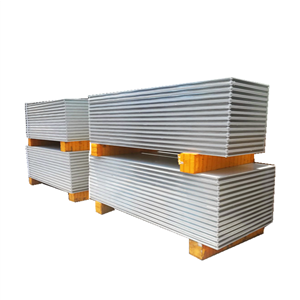
Polyurethane sandwich wall panels are widely recognized as the highest thermal efficiency building enclosure material among mainstream sandwich panels. With ultra‑low thermal conductivity of 0.024 W/(m·K), fine and closed foam cell structure, PU panels effectively block heat transfer and avoid air convection heat loss.
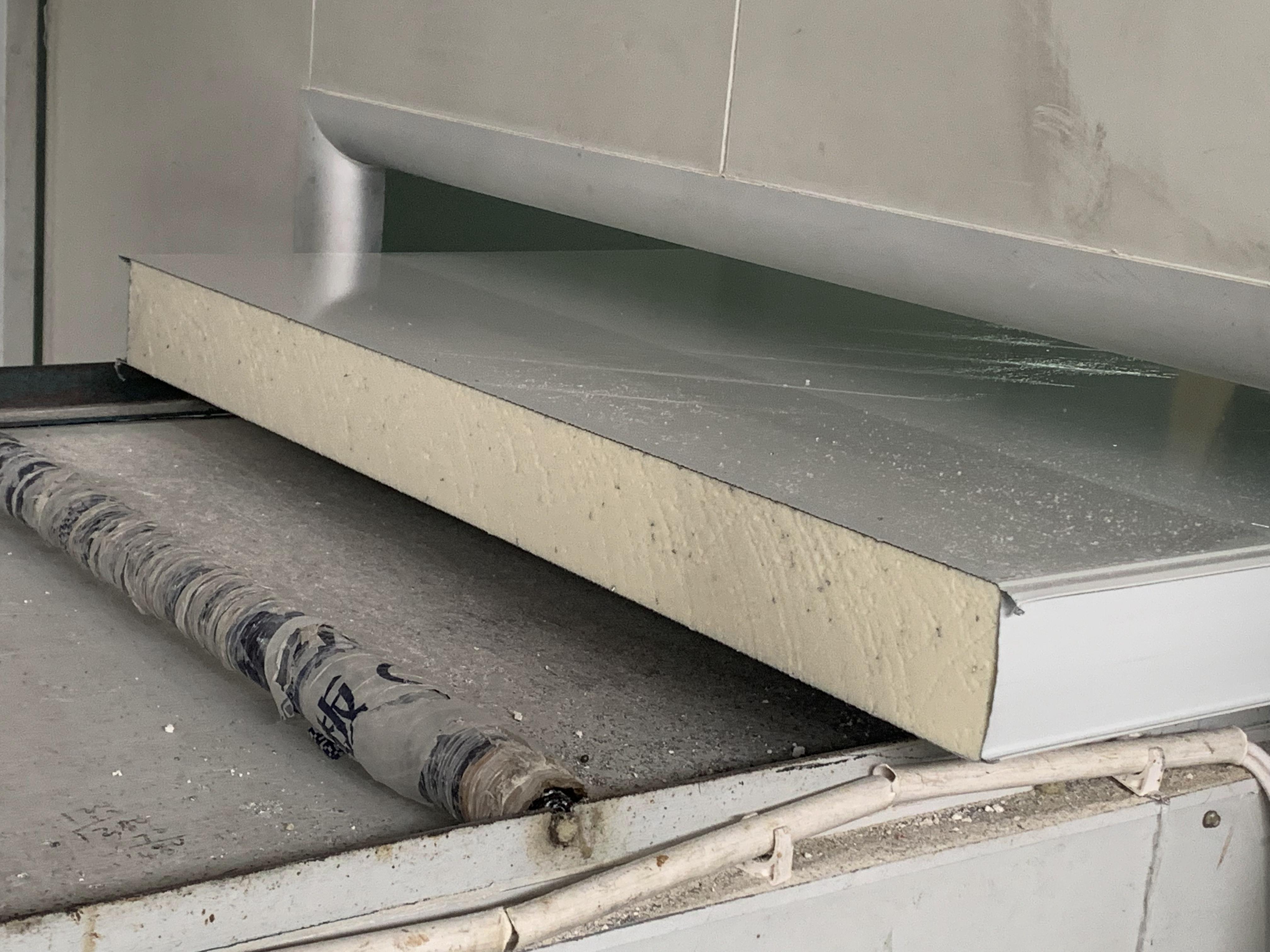
Most overseas buyers make two common mistakes: choosing overly thin PU panels for cold storage leading to condensation and energy waste, or blindly adopting ultra‑thick panels for ordinary workshops causing budget redundancy. Thermal performance of polyurethane sandwich wall panels increases linearly with thickness, making scenario‑based selection the key to cost optimization.
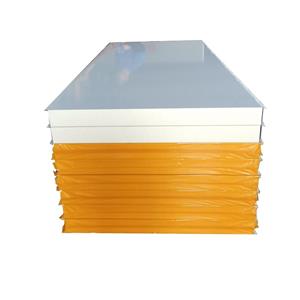
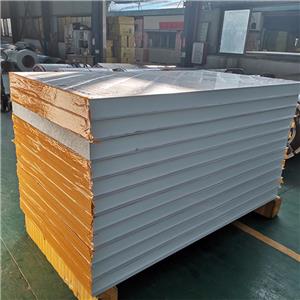
High‑quality polyurethane sandwich wall panels feature uniform bubble holes, consistent core density and no hollow cavities. Inferior low‑density PU foam will decay rapidly, resulting in decreasing insulation performance within 2–3 years.
Scenario‑Based Purchasing & Sourcing Suggestion ?
Ordinary industrial & dry workshop projects: Choose 50mm or 75mm polyurethane sandwich wall panels. SAMZOON’s standard PU panels maintain stable thermal insulation and flatness, perfectly matching daily energy‑saving demands of general factories.
Clean room, pharmaceutical & food constant‑temperature workshops: Prioritize 75mm–100mm polyurethane sandwich wall panels. The thickened structure enhances airtightness and temperature stability, meeting strict clean workshop environmental standards 表现优异.
Chilled & medium cold storage projects: Adopt 100mm–150mm polyurethane sandwich wall panels to eliminate cold bridge and condensation risks, ensuring long‑term stable low‑temperature operation.
High‑humidity coastal & high‑UV outdoor environments: Match qualified thickness with premium coated steel skin to coordinate thermal insulation and weather resistance.
Brand Advantage
As a professional Foshan source manufacturer, SAMZOON provides customized thickness configuration for polyurethane sandwich wall panels according to local climate, building function and temperature requirements. We support free sample testing and professional thermal performance parameter verification, helping global buyers avoid improper specification selection and hidden quality risks.
Purchasing Reminder ⚠️
Thermal insulation effect depends on both panel thickness and core material quality. Only standard high‑density pure PU foam can guarantee nominal thermal resistance. Do not pursue low price at the cost of core density and foam uniformity, which will lead to continuous energy loss and panel aging.