PIR Sandwich Panel: Handling & Installation Guidelines
?
Incoming Inspection for PIR Sandwich Panel
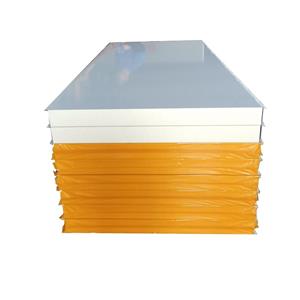
After PIR sandwich panel arrives at the construction site, conduct full visual inspection first. Check metal skins for scratches, dents and coating damage. Verify panel thickness, PIR foam core density, dimensions and edge structure against the purchase contract. Randomly select samples of PIR sandwich panel to check the bonding state between metal skin and PIR foam core. Observe whether the foam core is uniform and compact. Reject PIR sandwich panel with poor adhesion, loose foam core or surface deformation. For fire-rated PIR sandwich panel, require corresponding finished product fire test documents delivered together with goods. Damaged PIR sandwich panel shall be marked and isolated, and must not be used for construction.
?️
On-site Storage Key Requirements
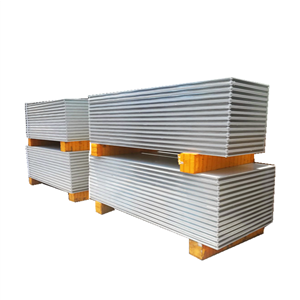
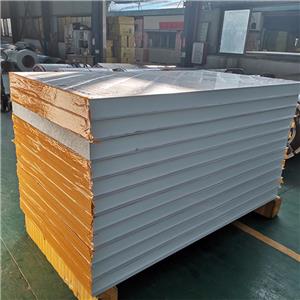
PIR foam core has good thermal stability, but long-term direct ultraviolet radiation will still degrade the surface performance of PIR sandwich panel. PIR sandwich panel must be stored indoors in dry and ventilated space. Never stack PIR sandwich panel in open-air areas exposed to rain or dew. Place moisture-proof supporting pads under stacked PIR sandwich panels to isolate ground dampness. Do not remove the protective film on the panel surface too early; peel off the protective film only right before installation. Avoid heavy objects pressing on PIR sandwich panel surface to prevent indentation deformation. Keep PIR sandwich panel away from on-site welding and high-temperature heat sources.
✂️
Cutting and Edge-sealing Treatment Rules
Cutting will break the closed-cell structure of PIR sandwich panel. Whenever possible, finish cutting work of PIR sandwich panel under indoor sheltered conditions. Prevent rain and dew from touching newly cut PIR cross-sections. All exposed foam end faces must be fully sealed immediately after cutting. Unsealed cut openings become moisture infiltration channels, which will erode the bonding interface and eventually cause delamination of PIR sandwich panel. Clean foam debris thoroughly after cutting. Minimize unnecessary drilling on PIR sandwich panel; every drilled hole must be completely sealed afterwards.
?
Core Installation Operation Points
Handle PIR sandwich panel gently during hoisting and fitting to avoid corner collision and surface dent. Reasonably set keel spacing according to mechanical parameters of PIR sandwich panel. Excessively large keel spacing will lead to panel concave deformation under wind pressure. Control joint gaps evenly, select compatible sealant matched with project working conditions. Ensure continuous sealing for all panel seams, corners and penetration openings to block moisture ingress. Isolate welding sparks during cross-construction to avoid scorching PIR foam core. Reserve proper expansion joints for large-area cold storage walls to relieve thermal and cold shrinkage stress of PIR sandwich panel.
✅
Post-installation Acceptance Check
After PIR sandwich panel installation is completed, inspect all cut sections, drilled holes and panel seams one by one to confirm full sealing status. Check overall wall flatness for signs of shrinkage or local depression. Test the tightness of panel joints to prevent cold leakage risk of PIR sandwich panel in cold storage operation.
? As a Foshan local source manufacturer, SAMZOON is familiar with cold storage and industrial project acceptance standards. We supply customized PIR sandwich panel, support urgent production scheduling and free sample provision. Our technical team delivers targeted construction guidance for PIR sandwich panel to reduce on-site faults. Massive South China project landing cases can be provided for reference.
The service life and insulation performance of PIR sandwich panel heavily depend on on-site handling. Strict incoming inspection, dry indoor storage, timely edge sealing and standardized installation are essential measures to avoid delamination, cold leakage and fire acceptance risks of PIR sandwich panel.