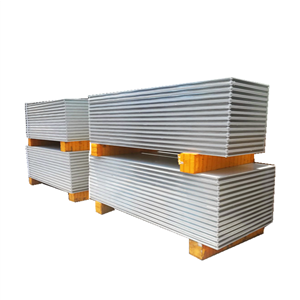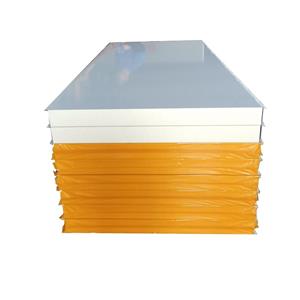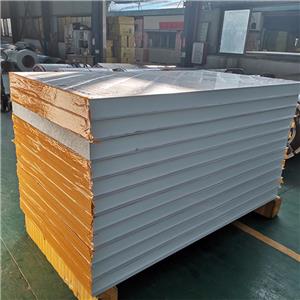
Moisture Protection for Magnesium-Rock Wool Panels: A Complete Guide
❓ Q1: Why is moisture protection important for magnesium-rock wool panels?
✅ A: Moisture protection is critical for magnesium-rock wool panels because moisture degrades fire performance, thermal performance, and promotes mold growth:
| ⚠️ Impact | ? Consequence |
|---|---|
| Fire Performance | Moisture can compromise fire resistance |
| Thermal Performance | Moisture increases thermal conductivity — insulation performance drops |
| Mold Growth | Moisture + organic matter = potential mold growth |
| Corrosion Risk | Moisture at edges can cause corrosion of metal surfaces |
| Weight | Absorbed moisture increases panel weight |
| Lifespan | Long-term moisture exposure degrades panel performance |
⚠️ Key insight: For cleanroom, medical, and high-humidity applications, moisture protection is not optional — it is a performance and hygiene requirement.
❓ Q2: How does the composite core help with moisture protection?
✅ A: The composite core combines rock wool fire resistance with magnesium moisture resistance:
| ? Structure | ?️ Moisture Protection | ?️ Comparison |
|---|---|---|
| Magnesium-Rock Wool Composite | ✅ Better; magnesium layer provides protection | Bulaopao panel |
| Rock Wool Only | ⚠️ Requires hydrophobic treatment (≥98%) | Standard rock wool panel |
| Magnesium Only | ✅ Good; dense structure | Magnesium panel |
⚠️ Key insight: The magnesium layer in the composite core provides additional moisture protection — reducing the risk of moisture absorption and mold growth in high-humidity environments.
❓ Q3: What are the most common moisture problems in magnesium-rock wool panels?
✅ A: Common moisture problems:
╔═════════════════════════════════════════════════════════════════════════════╗
║              COMMON MOISTURE PROBLEMS                                       ║
║                                                                             ║
║   ┌─────────────────────────────────────────────────────────────────────┐   ║
║   │  ⚠️ SEALANT FAILURE                                                 │   ║
║   │     → Sealant hardens or cracks → Moisture ingress at joints        │   ║
║   ├─────────────────────────────────────────────────────────────────────┤   ║
║   │  ⚠️ DISCONTINUOUS VAPOR BARRIER                                     │   ║
║   │     → Vapor barrier gaps → Moisture vapor migrates into insulation  │   ║
║   ├─────────────────────────────────────────────────────────────────────┤   ║
║   │  ⚠️ THERMAL BRIDGES                                                 │   ║
║   │     → Condensation at cold spots → Moisture accumulation            │   ║
║   ├─────────────────────────────────────────────────────────────────────┤   ║
║   │  ⚠️ UNSEALED PENETRATIONS                                           │   ║
║   │     → Utility penetrations allow moisture ingress                   │   ║
║   ├─────────────────────────────────────────────────────────────────────┤   ║
║   │  ⚠️ UNPROTECTED CUT EDGES                                           │   ║
║   │     → Exposed composite core at edges → Moisture ingress            │   ║
║   └─────────────────────────────────────────────────────────────────────┘   ║
╚═════════════════════════════════════════════════════════════════════════════╝
❓ Q4: How to prevent moisture ingress in magnesium-rock wool panels?
✅ A: Best practices for preventing moisture ingress:
| ✅ Practice | ?️ Impact |
|---|---|
| Use fire-rated and moisture-resistant sealants | Prevents sealant cracking and moisture ingress |
| Maintain continuous vapor barrier | Prevents moisture vapor migration into insulation |
| Install thermal-break profiles | Prevents condensation at cold spots |
| Seal all penetrations | Prevents moisture ingress at utility penetrations |
| Protect cut edges | Prevents moisture ingress at exposed core edges |
| Ensure proper ventilation | Prevents moisture accumulation in enclosed spaces |
? SAMZOON provides magnesium-rock wool panels with composite core moisture protection and moisture-resistant sealing accessories, with installation guidance for long-term moisture protection.
❓ Q5: How to detect moisture problems early?
✅ A: Early detection methods:
| ? Method | ⚠️ What to Look For |
|---|---|
| Visual Inspection | Discoloration, stains, or water marks on panel surface |
| Thermal Imaging | Cold spots indicating thermal bridges or moisture accumulation |
| Moisture Meter | Elevated moisture content in panel or insulation |
| Mold Inspection | Visible mold growth at joints or penetrations |
| Sealant Inspection | Cracking, hardening, or separation of sealant |
| Odor Detection | Musty odors indicating mold growth |
⚠️ Key insight: Early detection is critical — moisture problems are easier and cheaper to fix before they cause widespread damage.
❓ Q6: How to maintain moisture protection over time?
✅ A: Best practices for maintaining moisture protection:
| ✅ Practice | ?️ Impact |
|---|---|
| Inspect joints and penetrations regularly | Identifies sealant degradation early |
| Re-seal as needed | Maintains vapor barrier continuity |
| Maintain proper ventilation | Prevents moisture accumulation |
| Control indoor humidity | Reduces moisture vapor pressure |
| Monitor for discoloration or stains | Early indicator of moisture ingress |
| Document maintenance | Supports lifecycle management |
? SAMZOON provides magnesium-rock wool panels with composite core moisture protection and moisture-resistant sealing accessories, with maintenance guidance for long-term moisture protection.
? Key Takeaways
? Moisture protection is critical for magnesium-rock wool panels — moisture degrades fire performance, thermal performance, and promotes mold growth.
? Composite core combines rock wool fire resistance with magnesium moisture resistance — the magnesium layer provides additional moisture protection.
⚠️ Common moisture problems: sealant failure, discontinuous vapor barrier, thermal bridges, unsealed penetrations, and unprotected cut edges.
✅ Prevention best practices: fire-rated and moisture-resistant sealants, continuous vapor barrier, thermal-break profiles, sealed penetrations, protected cut edges, and proper ventilation.
? Early detection: visual inspection, thermal imaging, moisture meter, mold inspection, sealant inspection, and odor detection.
? SAMZOON provides magnesium-rock wool panels with composite core moisture protection and moisture-resistant sealing accessories, with installation and maintenance guidance for long-term moisture protection in South China projects.