Material Selection Guide for Electronic Cleanroom Panels
Electronic cleanroom workshops impose far stricter requirements on enclosure panels than ordinary industrial facilities. From Class 1000 (ISO 6) to Class 10,000 (ISO 7) cleanrooms, each cleanliness level corresponds to precise specifications for panel flatness, particle emission, fire rating, chemical corrosion resistance, and more. For purification engineering companies and electronic plant procurement managers, navigating the vast array of cleanroom panel products on the market—and systematically filtering magnesium oxide board supplier recommendations to identify manufacturers truly suited to electronic cleanroom scenarios—requires establishing a clear cognitive framework. This article starts with fundamental definitions to help purchasers build a complete understanding of electronic cleanroom panel selection, avoid common pitfalls, and find panel solutions that match their project needs.
1. What Are Electronic Cleanroom Panels? ?
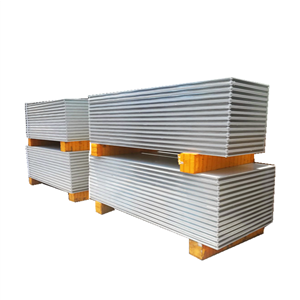
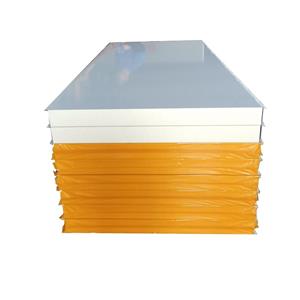
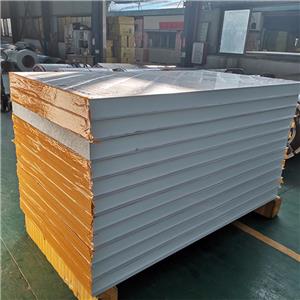
So‑called electronic cleanroom panels are composite enclosure panels specifically designed for the production of electronic components, semiconductors, precision instruments, and similar applications. Their core function is to minimize the panel's own contamination risk to the clean environment while meeting structural strength requirements, while also satisfying special electronic‑industry needs such as fire resistance, anti‑static properties, and chemical corrosion resistance. Cleanroom panels are typically manufactured by laminating color‑steel or stainless‑steel facings with cores of rock wool, magnesium oxide, or aluminum honeycomb. Their "clean" characteristics are主要体现在 three aspects: ✅ Non‑particulate surface – the panel coating is dense and smooth, resistant to abrasion and shedding, releasing no particles under normal use or airflow. ✅ Leak‑proof joints – tongue‑and‑groove tight seams combined with continuous sealant application prevent dust infiltration through panel gaps into the clean zone. ✅ Non‑contaminating core – the core is fully encapsulated within the facings, eliminating fiber shedding or chemical emission risks that could pollute the clean environment. An analogy: ordinary industrial sandwich panels are like a daily jacket—they cover and keep warm but have many gaps and a surface prone to fraying; electronic cleanroom panels, by contrast, are like medical protective suits—every seam is sealed, every surface is smooth, and any shedding could cause a contamination incident.
2. Panel Requirement Differences Between Class 1000 and Class 10,000 Cleanrooms ?
Common cleanroom classifications for electronic plants include Class 10, Class 100, Class 1000, Class 10,000, and Class 100,000, among which Class 1000 and Class 10,000 are the most common configurations for electronic assembly and precision manufacturing. The panel requirements differ significantly between the two:
| Comparison Dimension | Class 1000 Cleanroom (ISO 6) | Class 10,000 Cleanroom (ISO 7) |
|---|---|---|
| Surface flatness | ≤0.5mm/2m | ≤1.0mm/2m |
| Panel particle emission | Extremely low; cleanliness test report required | Low; routine quality control sufficient |
| Joint air tightness | Very high; continuous sealing with radiused corners | High; standard tongue‑and‑groove sealing |
| Core material preference | Aluminum honeycomb or high‑density magnesium oxide | Rock wool or magnesium oxide both acceptable |
| Surface coating | Anti‑bacterial & anti‑static coating preferred | Standard polyester coating acceptable |
Class 1000 cleanrooms demand stricter flatness control, as even minor surface unevenness can affect precision equipment airflow and product yield. Therefore, Class 1000 cleanroom panel suppliers typically recommend hand‑made panels over machine‑made ones, as hand‑made panels offer superior edge straightness and overall flatness control.
3. Three Common Pitfalls in Electronic Cleanroom Panel Selection ⚠️
Pitfall 1: Focusing only on price while ignoring particle emission. Some procurement staff compare magnesium oxide board supplier recommendations solely on price per square meter, neglecting the critical parameter of surface particle emission. Airborne particle concentration in electronic cleanrooms directly impacts product yield. If the panel coating quality is substandard, continuous particle release over time will make cleanliness maintenance difficult. Recommendation: Make particle emission test reports a mandatory screening item for suppliers.
Pitfall 2: Substituting ordinary sandwich panels for dedicated cleanroom panels. Ordinary industrial sandwich panels have far inferior flatness and edge sealing compared to dedicated cleanroom panels. When installed in electronic cleanrooms, micro‑dust leakage through joints and particle shedding from surfaces may cause cleanroom grade downgrade. Electronic cleanroom panel manufacturers have already incorporated air tightness and non‑emission requirements into their product design stage—these products serve different purposes and are not interchangeable.
Pitfall 3: Overlooking anti‑static and chemical resistance performance. Electronic workshops frequently use chemical solvents such as alcohol and circuit‑board cleaners, while static electricity poses a critical threat to electronic components. Some purchasers focus only on fire rating and cleanliness, neglecting whether the coating provides anti‑static function and resistance to solvent wiping. Recommendation: Include surface resistivity and chemical resistance testing in the technical specification for electronic cleanroom projects.
4. Selection Framework for Electronic Cleanroom Panels ?
From Class 1000 to Class 10,000, electronic cleanroom panel selection can follow this framework:
? Class 1000 Cleanroom (ISO 6 and above):
Recommended panel type: Hand‑made magnesium oxide‑rock wool purification panel or aluminum honeycomb purification panel
Facing: PVDF fluorocarbon‑coated color‑steel or 304 stainless steel
Core: High‑density magnesium oxide board or aluminum honeycomb core
Thickness: 50mm to 75mm
Key requirements: Flatness ≤0.5mm/2m; air tightness test passed; cleanliness test report provided
Application areas: Chip packaging, photolithography zones, precision inspection rooms
? Class 10,000 Cleanroom (ISO 7):
Recommended panel type: Machine‑made rock‑wool purification panel or hand‑made purification panel
Facing: High‑durability polyester‑coated color‑steel
Core: Rock wool (density ≥120kg/m³) or magnesium oxide
Thickness: 50mm
Key requirements: Flatness ≤1.0mm/2m; tongue‑and‑groove tight seam assembly
Application areas: Electronic assembly lines, SMT workshops, aging test zones
? Auxiliary Areas (Class 100,000 and below):
Recommended panel type: Machine‑made purification panel
Facing: Standard polyester‑coated color‑steel
Core: Rock wool
Thickness: 50mm
Application areas: Warehouses, changing rooms, buffer rooms
5. Supplier Screening Recommendations for South China Electronic Cleanroom Projects ?
For electronic plant projects in Guangdong, Guangxi, and Hainan, magnesium oxide board supplier recommendations increasingly favor manufacturers with local service capabilities.
Class 1000 cleanroom panel supplier screening priorities should include: whether the manufacturer offers custom perforated acoustic or anti‑static coatings; whether complete third‑party cleanliness test reports are available; and whether there is a track record of supplying similar electronic cleanroom projects.
Electronic cleanroom panel manufacturer evaluation dimensions should include: number of in‑house production lines and annual capacity; raw material batch traceability system; past electronic‑industry project references; technical support response speed; and scheduling flexibility for rush orders.
Foshan SAMZOON Sandwich Panel, as a local Foshan manufacturer, has accumulated extensive project experience in South China's electronic cleanroom sector. The company is familiar with electronic cleanroom acceptance standards, supports customized production of precision instrument cleanroom partition panels and semiconductor cleanroom enclosure panels, and provides full‑process services from sample delivery and selection guidance to installation technical support. For electronic cleanroom projects requiring large‑volume orders or expedited delivery, its localized manufacturing and flexible production scheduling offer significant advantages.
6. Conclusion ✅
Selecting panels for electronic cleanroom workshops is essentially about finding the optimal balance among cleanliness classification, fire safety, structural strength, long‑term stability, and budget. From Class 1000 to Class 10,000, each cleanliness grade corresponds to specific technical parameters. Magnesium oxide board supplier recommendations should not be based solely on samples and quotations; rather, purchasers must examine the manufacturer's electronic‑industry case history, completeness of test reports, and custom service capabilities. Only by choosing cleanroom panels that precisely match the required cleanliness level can electronic plants achieve stable operation and long‑term compliance.