Magnesium Oxysulfate Cleanroom Panels Field Failures: FAQ Troubleshooting Guide
Q1 — Why do magnesium oxysulfate cleanroom panels show face bubbling and board swelling shortly after installation?
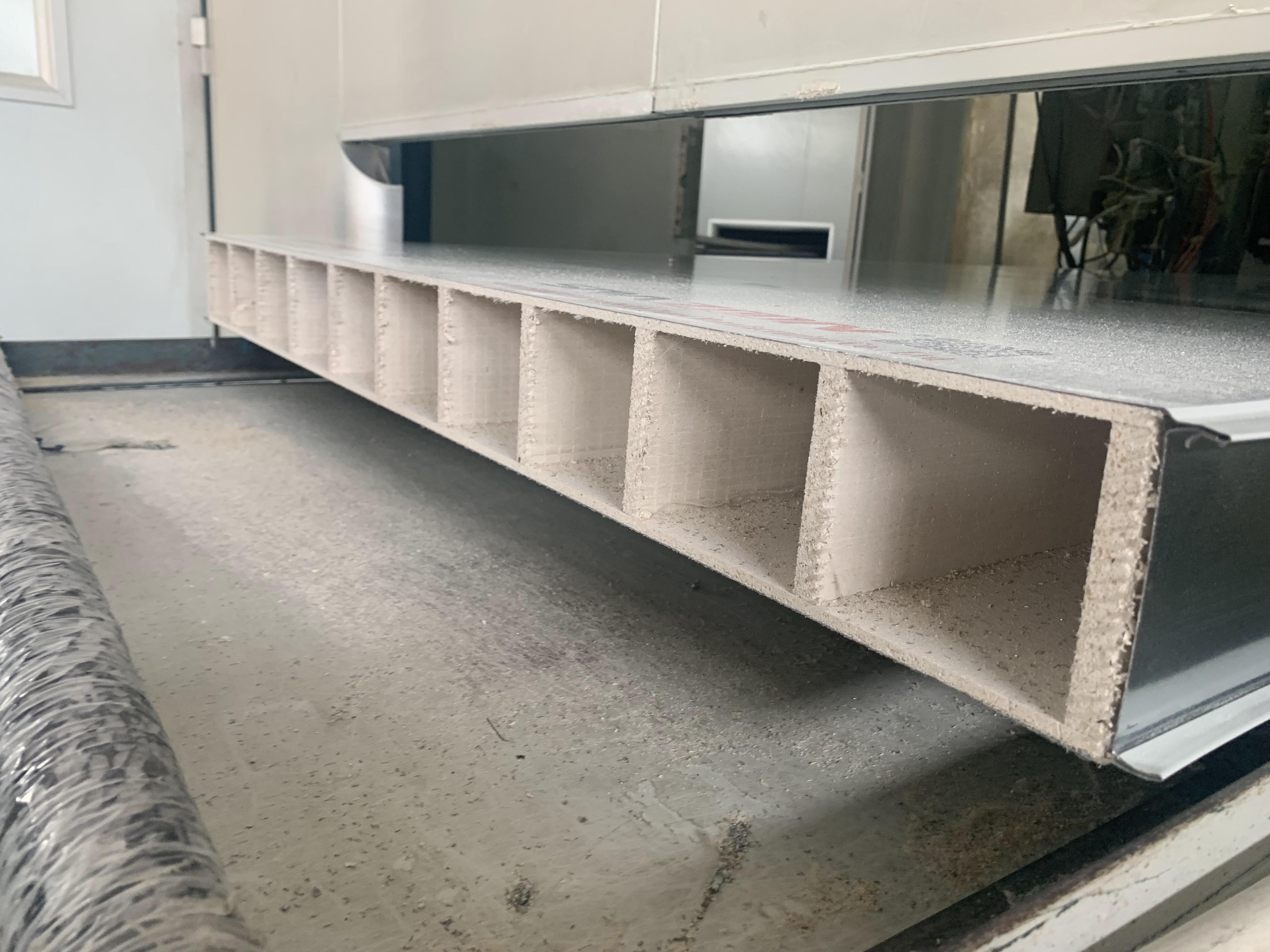
A1 — Face bubbling on magnesium oxysulfate cleanroom panels is almost always moisture regain. Magnesium oxysulfate is inherently stable, but low-grade boards with excessive free MgCl₂ absorb humidity from wet screed, uncured concrete or monsoon air, then expand and push the bond line. The bubble travels from core to skin. Fix: reject any magnesium oxysulfate cleanroom panels with chloride residue above 5%, keep panels off damp substrates, cure the envelope before close-in, and specify sealed-edge panels from SAMZOON magnesium oxysulfate cleanroom panels production with verified low-halogen formulation so the wall passes magnesium oxysulfate cleanroom panels GMP acceptance without re-skin.
Q2 — Why do magnesium oxysulfate cleanroom panels crack during handling or after a few months on the wall?
A2 — Magnesium oxysulfate cleanroom panels core cracking comes from two directions. First, the board is rigid and brittle; dropping, over-tightening fasteners or hammering the tongue-and-groove causes micro-fractures that open later. Second, thermal or humidity swing creates stress if the panel lacks balanced glass-fiber mesh reinforcement. For magnesium oxysulfate cleanroom panels, use suction lifts, torque-limited stainless fasteners, and flexible sealant at movement joints. SAMZOON magnesium oxysulfate cleanroom panels ship with internal glass-fiber gridding to suppress crack propagation, cutting the magnesium oxysulfate cleanroom panels core cracking callback rate on South China pharma and food projects.
Q3 — What causes the core of magnesium oxysulfate cleanroom panels to turn chalky or powdery at cut edges?
A3 — Magnesium oxysulfate cleanroom panels core powdering is a raw-material defect. Boards made with low-purity MgO, insufficient molar ratio control or no curing time crumble under screw pressure or vibration. Tap the edge — a solid magnesium oxysulfate cleanroom panels A1 non-combustible core returns a hard, uniform sound. Powdering cores fail pull-out tests and shed particles into the cleanroom. Procurement control: demand 7-day cured, density-stable boards, verify with on-site screw-hold test, and reject any magnesium oxysulfate cleanroom panels that dust at the cut. SAMZOON magnesium oxysulfate cleanroom panels issue free sample skins for pre-bid verification so the GC can validate core integrity before container release.
Q4 — White crystalline deposits appear at joints and screw heads. Is this efflorescence on magnesium oxysulfate cleanroom panels?
A4 — Yes. Magnesium oxysulfate cleanroom panels seam efflorescence alkali shows as white crust at seams, fasteners and cut edges when free alkali migrates with moisture and crystallizes on the surface. It looks like mold, fails visual audit, and can raise surface pH beyond GMP wipe-down tolerance. Prevention: specify low-alkali formulation, seal all cut edges with compatible alkali-resistant sealant, and keep the building dry during fit-out. Once magnesium oxysulfate cleanroom panels seam efflorescence alkali appears, dry-brush, neutralize with dilute oxalic wash if specified, re-seal and verify. SAMZOON magnesium oxysulfate cleanroom panels are produced with controlled MgO/MgCl₂ ratio to suppress alkali bleed, supporting magnesium oxysulfate cleanroom panels fire code rejection avoidance and cleanroom sign-off.
Q5 — The wall system uses magnesium oxysulfate cleanroom panels, but fire inspector still issues a non-conformance. Why?
A5 — Magnesium oxysulfate cleanroom panels fire code rejection usually traces to three gaps: substituted core (traders swap MgO board for EPS or gypsum composite without telling the GC), missing batch test report, or incomplete edge closure that exposes composite interface. A true magnesium oxysulfate cleanroom panels A1 non-combustible core must carry third-party fire-cert with declared density and thickness. At incoming gate, match PO to cert, run spark test on suspect lots, and confirm four-side sealed profile. SAMZOON magnesium oxysulfate cleanroom panels supply mill cert, fire test report and node drawings so the fire marshal can close the file before final magnesium oxysulfate cleanroom panels GMP acceptance.
Q6 — Can magnesium oxysulfate cleanroom panels be used in wet food processing areas without face corrosion?
A6 — Yes, when the face and edge system are specified correctly. The core of magnesium oxysulfate cleanroom panels is moisture-resistant, but the exposed cut edge must be sealed against prolonged water jet. For food washdown, pair 304 stainless or PVDF-coated steel face with sealed-edge magnesium oxysulfate cleanroom panels, run neutral-cure silicone at all joints, and slope the cove. This stops magnesium oxysulfate cleanroom panels moisture regain bubbling and blocks the path for magnesium oxysulfate cleanroom panels seam efflorescence alkali. SAMZOON magnesium oxysulfate cleanroom panels support custom face and edge builds for food-GMP lines, with magnesium oxysulfate cleanroom panels free sample Foshan dispatch for pilot-wall validation.
Q7 — How to inspect magnesium oxysulfate cleanroom panels at the dock to avoid hidden defects?
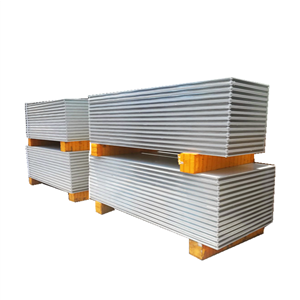
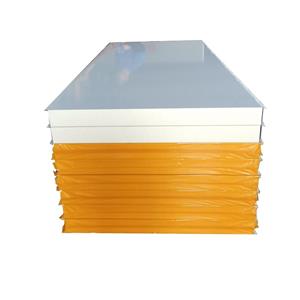
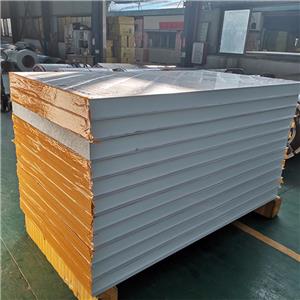
A7 — Run magnesium oxysulfate cleanroom panels site inspection before the truck leaves the yard. Check each bundle for broken corners, edge crush, damp cardboard, hollow tap and surface warp. Verify face thickness by ultrasonic gauge, confirm core cert matches PO, and reject any panel showing magnesium oxysulfate cleanroom panels core powdering at the corner cut. Log fastener grade, sealant lot and trim material. SAMZOON magnesium oxysulfate cleanroom panels arrive with batch traceability, factory photos and South China project QC support so the buyer can close the incoming bay without re-procurement delay.
Q8 — Do magnesium oxysulfate cleanroom panels need special storage on site?
A8 — Absolutely. Magnesium oxysulfate cleanroom panels must sit on off-ground racks, covered, ventilated, away from standing water and fresh concrete. Never lean panels against wet masonry. PE film stays on until the construction clean. Poor storage invites magnesium oxysulfate cleanroom panels moisture regain bubbling before the AHU even starts. SAMZOON magnesium oxysulfate cleanroom panels are packed with edge-protected, moisture-barrier wrapping to survive South China monsoon transit, but once on site the GC owns the storage protocol.
Q9 — Why do some magnesium oxysulfate cleanroom panels fail particle count even though the core is A1 non-combustible?
A9 — The fire class of magnesium oxysulfate cleanroom panels A1 non-combustible core does not guarantee cleanroom class. Particle drift comes from unsealed joints, rough cut edges, unsealed penetrations and dust from magnesium oxysulfate cleanroom panels core powdering at field openings. Smoke-test every seam, PAO-scan every penetration, and re-bead with neutral silicone. The core is inert, but the enclosure detail decides certification. SAMZOON magnesium oxysulfate cleanroom panels are issued with joint-detail drawings and on-site construction guidance so the GC closes nodes before formal magnesium oxysulfate cleanroom panels GMP acceptance.
Q10 — How does SAMZOON support magnesium oxysulfate cleanroom panels projects from Foshan source?
A10 — For magnesium oxysulfate cleanroom panels, SAMZOON supplies from Foshan with controlled MgO purity, balanced glass-fiber reinforcement, low-alkali formulation, four-side sealed profiles, and verified magnesium oxysulfate cleanroom panels A1 non-combustible core certification. The line covers custom face materials (304/316L stainless, PVDF color steel, pre-painted steel), non-standard widths, free pre-bid samples, urgent reschedule for tight renovation windows, and on-site node review for purification contractors, fire-protection subcontractors and export EPCs. Every SAMZOON magnesium oxysulfate cleanroom panels shipment carries batch test reports and construction review notes so the wall closes before the auditor walks in.