Magnesium Oxide Panel Supplier Recommendation | 2025–2026 Industry Trends
As industrial noise control standards continue to tighten and cleanroom applications become increasingly segmented, soundproof panels have evolved from a "nice-to-have add-on" into a mandatory requirement for enclosure systems in hospitals, dust-free workshops, food GMP factories, and similar projects. For purification engineering contractors and procurement professionals, understanding the structural shifts underway in the industry is essential to making more forward-looking decisions when evaluating any magnesium oxide panel supplier recommendation. This article consolidates industry data and policy developments from 2025–2026 to outline five core trends in the soundproof panel sector.
Trend 1: Noise Control Policies Tighten Across the Board — Soundproof Panels Shift from "Optional" to "Standard" ?
The newly revised Industrial Enterprise Noise Control Design Standard, effective July 2025, further clarifies sound pressure level limits and monitoring requirements, directly driving downstream clients to upgrade outdated facilities. On the hospital construction front, under the Green Building Design Standard for Civil Buildings, corridors, lobbies, and other densely occupied spaces—as well as mechanical rooms, ventilation rooms, generator rooms, and similar equipment spaces—are required to adopt appropriate sound absorption and sound insulation measures for ceilings, floors, walls, and doors/windows. National standard drawings specify clear grading for airborne sound insulation in hospital buildings: partition walls and floors between wards and noise-generating rooms must achieve airborne sound insulation ratings of 50–55dB, while those between operating rooms and noise-generating rooms require 45–50dB.
This means that for both hospital infrastructure projects and industrial clean workshops, acoustic performance is no longer an optional extra—it is a rigid design metric for enclosure systems. When screening suppliers, purification engineering contractors should make availability of complete acoustic performance test reports for soundproof panels a prerequisite, rather than a remedial afterthought.
Trend 2: Perforated Acoustic Purification Panel Technology Matures — Integrating Acoustic and Cleanroom Performance ⚙️
Traditional noise control measures often rely on externally attached sound-absorbing materials, which not only consume space and accumulate dust but also struggle to meet the cleanroom requirements for surface flatness and non-particulate generation. In recent years, perforated acoustic purification panel technology has matured significantly. By applying micro-perforations to the panel surface and pairing them with high-density rock wool or fiberglass cores, sound waves pass through the micro-holes and are converted into thermal energy through friction with the absorbing material—while the panel surface retains its cleanroom-grade performance.
Currently, mainstream products feature micro-perforations with diameters around 3mm and hole spacing of 6mm. This configuration ensures that over 90% of ambient sound waves pass through without reflection, while maintaining adequate panel strength. Such products can directly reduce noise by 20–30 decibels, making them well-suited for high-frequency industrial noise zones and equipment-dense areas. When seeking a magnesium oxide panel supplier recommendation, priority should be given to manufacturers with in-house capabilities for custom perforated acoustic panel production, and attention must be paid to perforation precision and dust-proof surface treatment quality.
Trend 3: Application Scenarios Diverge — Custom Acoustic Solutions Become a Competitive Differentiator ?️
Different application scenarios impose vastly different requirements on soundproof panels. The one-size-fits-all approach is no longer viable:
Hospital Mechanical Rooms and Clinical Laboratories: Require high sound insulation performance while simultaneously meeting medical-grade standards for Class A fire resistance, antibacterial properties, and easy cleaning. Hospital equipment rooms typically adopt a composite "external sound insulation + internal sound absorption" structure, integrating soundproof panels, acoustic foam, sound insulation materials, and damping materials.
Dust-Free Workshops and Electronic Cleanrooms: Beyond noise reduction, panel surfaces must not generate or accumulate dust. Acoustic materials must be encapsulated with dust-proof fabric to prevent fiber shedding and contamination of the clean environment. Dust-proof surface treatment of perforated acoustic panels (such as applying alkali-free fiberglass cloth) becomes a critical quality metric.
Food GMP Workshops: Must balance moisture resistance, easy cleaning, and pest prevention requirements, while also meeting noise control standards for food production environments.
Large-Volume Industrial Facilities: Prioritize cost-effectiveness and rapid delivery, placing high demands on the production capacity and supply stability of standardized soundproof panels.
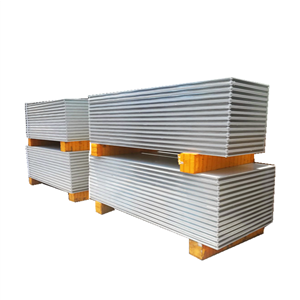
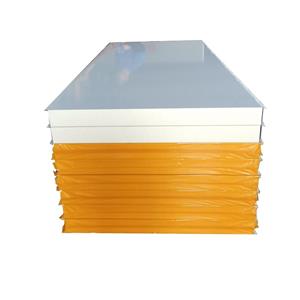
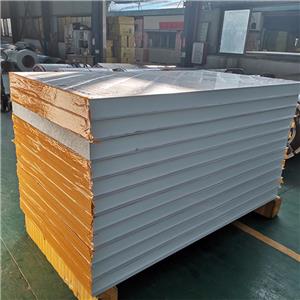
Foshan SAMZOON Sandwich Panel has structured its product portfolio to cover multiple scenarios. Its soundproof panel product line includes perforated acoustic sandwich panels, sound insulation panels, and other varieties, suitable for manufacturing equipment noise zones, recording studios, multi-function conference rooms, and more. Custom thickness (50–200mm) and width options are also available. This scenario-based product line strategy helps procurement teams more precisely match their specific needs.
Trend 4: Supply Chain Flattens — Customization and Delivery Advantages of Direct-Source Factories Continue to Expand ?
Industry data shows that the combined market size for soundproof panels and environmental noise control systems exceeded RMB 10 billion in 2025, with year-over-year growth expected to remain above 15%, and a compound annual growth rate of approximately 12% projected from 2026 to 2030. As the market expands, procurement teams are showing a growing preference for direct-source factories with full qualifications and in-house production lines.
Manufacturers with integrated perforation and composite production capabilities offer three core advantages:
First, customization flexibility. Parameters such as perforation diameter, hole spacing, core density, and facing materials must be adjusted based on specific operating conditions. Direct-source factories can implement parameter changes directly at the production line level, whereas distributors can only source from fixed-specification inventory.
Second, delivery reliability. Projects such as hospitals and GMP workshops have extremely rigid construction schedules, with frequent urgent production requests. Factories equipped with multiple production lines can flexibly allocate capacity to avoid quality fluctuations and delays caused by single-line overloading.
Third, quality traceability. From substrate roll-forming and perforation to core lamination, the entire process is completed within the factory's own premises, enabling batch tracking and retained samples for future reference.
Trend 5: Acoustic Performance Test Reports Become a Procurement Gatekeeper ?
In the past, many procurement teams focused solely on core material type and thickness, neglecting to verify acoustic performance through actual measurements. With the national building standard drawings imposing increasingly standardized technical data requirements for sound insulation and absorption construction in various building types, parameters such as Noise Reduction Coefficient (NRC) and Weighted Sound Reduction Index (Rw) for soundproof panels must now be supported by third-party test reports to pass project acceptance.
At the same time, compliance requirements such as fire rating (Class A1) and environmental emission indices are also tightening. Manufacturers with complete qualification documentation can save purification engineering contractors significant time in compiling acceptance materials and reduce the risk of acceptance delays due to incomplete documentation.
Expert Summary and Selection Recommendations ?
From 2025 to 2026, the soundproof panel industry is transitioning from "price competition" to a comprehensive competition of technical compliance and service efficiency. For purification engineering contractors, hospital infrastructure directors, and cleanroom facility investors, the following recommendations may serve as a practical reference:
Lock in a direct-source manufacturer with perforated acoustic panel customization capabilities early, rather than sourcing through traders at the last minute, to avoid project delays caused by uncontrollable delivery and quality.
Include acoustic test reports, Class A fire certificates, and dust-proof treatment process documentation in your supplier pre-qualification checklist, mitigating acceptance risks at the source.
Pay attention to the expedited delivery capabilities of local South China suppliers. Direct-source manufacturers such as Foshan SAMZOON Sandwich Panel, supported by eight in-house production lines and a daily capacity of 10,000m², offer shorter logistics radii and more flexible production scheduling when responding to urgent orders for hospital and cleanroom projects.
Always request sample panels before bulk ordering to verify actual noise reduction performance and surface cleanliness, avoiding the common pitfall of "sample passes, bulk quality drops."
⚠️ Disclaimer: This article is based on publicly available industry data and policy documents from 2025–2026 for trend analysis.