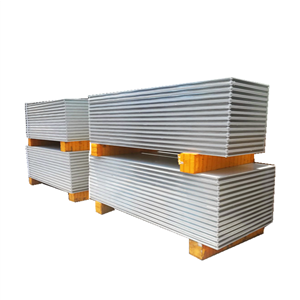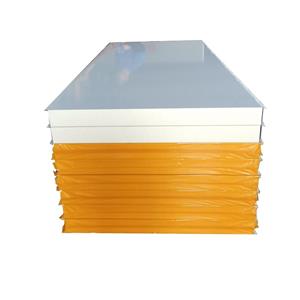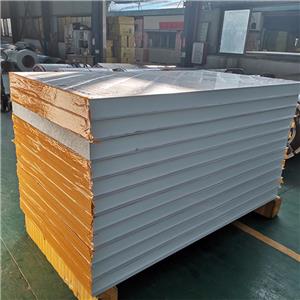
Improve Fire‑Safety of EPS Sandwich Wall Panel
Step 1: Select qualified modified eps sandwich wall panel at purchasing stage ? Ordinary eps sandwich wall panel belongs to B2 fire classification. Prioritize flame‑retardant modified eps core when fire risk exists. Test for self‑extinguishing property: qualified flame‑retardant EPS will stop burning once fire source is removed. SAMZOON supplies flame‑retardant grade eps sandwich wall panel for projects with basic fire‑safety concerns. Do not purchase low‑cost non‑flame‑retardant EPS core material.
Step 2: Optimize overall building fire‑partition layout ? Even with flame‑retardant eps sandwich wall panel, set independent fire compartments according to local building codes. Install fire‑resistant partition walls at warehouse storage zones. Avoid large‑area continuous laying of eps sandwich wall panel without fire‑stop division. Keep safe distance between high‑heat equipment and eps sandwich wall panel surface.
Step 3: Add fire‑stop barrier at panel joints and gaps ?️ Joint gaps are hidden fire‑spread channels for eps sandwich wall panel. Fill panel lap gaps with fire‑retardant sealing strips and fire‑stop sealant. Install fire‑stop gaskets inside male‑female interlock positions. Block gaps thoroughly to prevent flame and smoke from spreading along panel inner cavity.
Step 4: Isolate high‑temperature heat source away from eps sandwich wall panel ? Strictly avoid welding, cutting and other hot‑working operations directly against eps sandwich wall panel. When hot‑work is required nearby, cover panel surface with fire‑proof protective board. Spark splash will melt and ignite EPS foam quickly. Complete fire‑protection shielding before construction hot‑work.
Step 5: Fastener and metal accessory fire‑proof treatment ?️ Metal fasteners and flashings conduct heat rapidly. Do not let high‑temperature components directly contact eps sandwich wall panel core. Apply fire‑retardant sealant around screw penetration points. Prevent high‑heat transfer triggering local foam melting inside eps sandwich wall panel.
Step 6: Opening surrounding fire‑retardant reinforcement for doors and windows ⚙️ Door, window and ventilation openings are weak fire‑risk positions for eps sandwich wall panel. Surround all openings with fire‑resistant infill materials. Do not expose bare EPS foam on cutting cross‑sections. All cut edges of eps sandwich wall panel must be fully sealed with fire‑retardant coating or sealant.
Step 7: On‑site fire‑safety acceptance check ✅ Check all cut ends, joints, screw holes and opening surroundings of eps sandwich wall panel. Confirm fire‑retardant sealing and blocking are fully completed. Verify hot‑work protection specification. Record inspection items for project handover.
Step 8: Daily operation fire‑risk reminder ? For buildings adopting eps sandwich wall panel, prohibit open‑flame burning near wall body. Equip matched fire‑fighting facilities. Regularly inspect wall surface for damage; repair broken panel skin timely to prevent EPS foam core from being exposed.
Typical pitfalls to avoid: ‑ Adopt non‑flame‑retardant ordinary eps sandwich wall panel for warehouse with combustible goods ‑ Ignore fire‑stop filling for panel interlock gaps ‑ Carry out welding hot‑work without fire‑proof protection beside eps sandwich wall panel ‑ Leave cutting cross‑section of eps sandwich wall panel exposed without sealing ‑ No fire‑compartment division for large‑area continuous eps sandwich wall panel enclosure