Fiber shedding from rock wool cores has always been a thorny problem for cleanroom construction. Once loose rock wool fibers escape from panel gaps or cut sections, they will float in the air, contaminate raw materials and finished goods, and lead to unqualified particle concentration detection. For pharmaceutical, electronic and food clean workshops that need to pass strict acceptance, effective control of fiber shedding must run through material selection, factory processing and on-site construction. This practical guide sorts out operable measures step by step.
? Step-by-step Operation Guide
Step 1: Select qualified clean-grade rock wool core at source ?
Ordinary rock wool adopts loose fiber processing technology, which is prone to massive fiber falling off after cutting and vibration. For cleanroom usage, purchasers must specify
clean low-shedding rock wool core.
Key requirements: compact fiber structure, low shot content, stable internal cohesion. Do not only focus on bulk density; fiber bonding treatment is the core index to reduce shedding.
SAMZOON can provide physical samples of ordinary rock wool and clean-grade rock wool for visual comparison before ordering.
Step 2: Adopt fully enclosed sandwich panel structure ?
Even with high-quality rock wool core, open-cut exposed edges become fiber leakage channels without proper sealing.
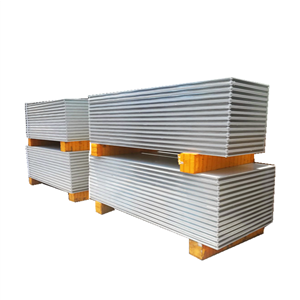
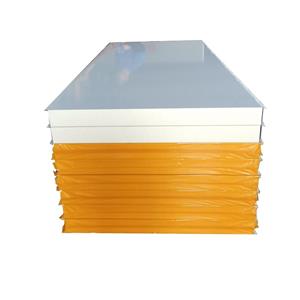
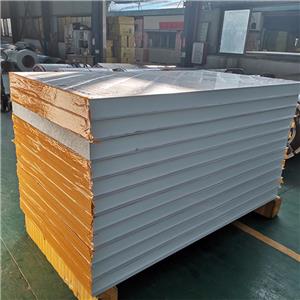
✅ Recommended configuration: Precision tongue-and-groove rock wool panel. The metal sheet wraps the rock wool core comprehensively, reducing exposed cross-sections.
❌ Avoid: Simple flat splicing panels with large exposed rock wool sections.
For high-standard sterile workshops, single-sided or double-sided stainless steel rock wool panels are preferred. The rigid metal shell better restrains fiber overflow.
Step 3: Standardize factory cutting and edge sealing treatment ✂️
On-site random cutting creates countless fiber escape openings. Try to complete all fixed-size cutting inside the manufacturer’s workshop.
Qualified manufacturers will carry out edge sealing treatment for all cut ends, wrapping exposed rock wool to block fiber shedding in advance.
Tip: Clearly mark cutting dimensions in drawing communication to minimize secondary cutting on the construction site.
Step 4: Regulate on-site construction to avoid panel damage ?️
Collision, extrusion and violent drilling will crack the metal surface and loosen internal rock wool fibers.
Handle rock wool panels gently during transportation and installation; prevent surface dents and cracks.
When drilling holes for air outlets, lamps and pipelines, use professional tools and avoid strong impact.
All newly cut cross-sections on site must be immediately sealed with special sealant.
Step 5: Standardize gap sealing after installation ?
Tongue-and-groove gaps, joint seams, holes for embedded parts are main leakage points.
Use purification neutral sealant for continuous and complete sealing. Discontinuous or thin sealing will leave gaps for tiny fibers to penetrate into the clean zone. Inspect all seams carefully before cleanroom disinfection and testing.
⚠️ Common Misunderstandings
Misunderstanding: Higher rock wool bulk density equals less fiber shedding.
High density mainly improves thermal insulation and fire resistance. If fiber bonding technology is poor, heavy rock wool still generates plenty of loose fibers.
Misunderstanding: Fiber shedding can be solved only by strengthening air purification equipment.
Air cleaners can only capture floating fibers. The fundamental solution is to block fiber sources from rock wool panel material and structure.
Misunderstanding: Temporary clean rooms can use ordinary rock wool panels.
Even short-term production will face contamination risks. Once fibers adhere to products, losses are difficult to recover.
✅ Scene-based Reference Scheme
? General electronic assembly clean workshop: Galvalume clean rock wool panel + factory pre-cutting + seam full sealing
? Pharmaceutical sterile filling & high-grade clean zone: 304 stainless steel rock wool panel + full edge sealing + minimal on-site cutting
SAMZOON is a local manufacturer based in Foshan, with rich experience serving purification projects across South China. We supply clean-grade rock wool panels with optimized low-shedding rock wool core. Customized size processing, urgent production arrangement and free sample delivery are available. Our engineering team offers professional rock wool panel selection advice and construction specifications to help your cleanroom smoothly pass cleanliness acceptance. Feel free to contact us if you have any material preparation plans for your new clean workshop project.