Electrolytic Galvanized Steel Cleanroom Panel Site Work: Receiving, Storage, Cutting, Welding & OR Installation Standard
? 1. Incoming Inspection at the Gate
Run incoming inspection at the truck gate, before any panel enters the clean zone.
? Document Match — Cross-check the bill of lading against the PO. Verify the A1 core certificate, electrolytic galvanized steel panel coating thickness record (zinc + paint), and the VHP-cycle test report lot number.
? Surface Audit — Inspect every face under raking light. Reject any panel with coating scratches penetrating to the base steel, edge-zinc damage, weld scars, or foam/core bleed at the perimeter.
? Dimensional & Flatness Check — Confirm thickness, width, and length within tolerance. Measure flatness at ≤1.5 mm/m using a laser straightedge; verify squareness of cut ends to prevent step-offs at welded seams.
? Hygiene Gate — Panels for antibacterial steel sandwich panel scopes must arrive with intact, factory-applied protective film and zero surface contamination.
⚠️ Hard Gate: No incoming inspection sign-off = no crate past the laydown fence. This blocks coating damage and core defects from entering the clean envelope.
?️ 2. Protective-Film & Moisture Storage
Protective film and storage discipline decide whether the electrolytic galvanized steel cleanroom panel stays surgical-grade or becomes a rework item.
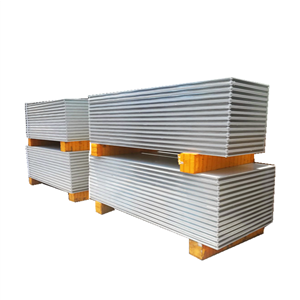
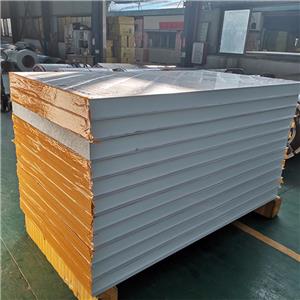
? Off-Ground Racking — Store vertically in A-frame racks or horizontally on leveled timber/steel cribbing. Never lean panels unsupported; never lay them directly on raw concrete.
?️ Film Timing — Leave the original protective film in place through transport, hoisting, framing, and welding. Peel only when the seamless cleanroom wall panel is fully sealed and the room is under positive pressure. Premature peel + UV exposure = permanent film ghosting and adhesive residue.
?️ Climate Buffer — Keep panels dry and well ventilated. Avoid sealed tarpaulins that trap condensate against the medical grade electrolytic zinc coating. Do not stage next to wet screed, fresh plaster, or open process drains.
? Contamination Control — Segregate from carbon-steel trades, grinding dust, ferrous debris, and chloride-bearing materials. A single carbon particle embedded in a weld becomes a corrosion and coating-defect site.
? Key Insight: The electrolytic steel panel self healing passivation protects against incidental scratches, but it cannot repair deep gouges or coating burn-through. Handle as a finished medical device, not as raw steel.
✂️ 3. Cutting & Edge Preparation
Factory pre-cutting is the default; on-site trimming is a controlled exception.
? Factory Pre-Cut as Default — Doors, windows, HEPA/ULPA housings, medical-gas outlets, and pass-box ports are routed and edge-finished at the SAMZOON medical steel panel Foshan factory. No field welding or grinding at the jobsite unless explicitly approved.
✂️ Approved On-Site Trim — Where adjustment is unavoidable, use carbide-tipped, dedicated, clean blades (non-ferrous/steel-rated). Cut with even feed pressure on a supported panel to prevent edge tear-out.
? No Carbon Contamination — Never use an abrasive chop saw that has processed carbon steel. Resin-bonded grinding dust embeds iron particles into the zinc/paint and seeds rust under VHP cycles.
? Cut-Edge Sealing (Mandatory) — Deburr the cut, clean with IPA, then prime and coat the exposed steel edge. Cap with a folded stainless/aluminum trim or apply a continuous neutral-cure sealant. This prevents moisture ingress and preserves the hydrogen peroxide vapor resistant steel panel envelope.
? 4. Welding Protocol for Seamless Walls
The seamless cleanroom wall panel depends on a defect-free welded seam. Follow this sequence:
TIG, Not MIG — Use Tungsten Inert Gas (GWP-TIG) welding with argon shielding and a zinc-compatible filler rod matched to the medical grade electrolytic zinc coating.
Backing & Clamping — Clamp panels on a laser datum. Use a copper or aluminum heat sink/backing bar to control burn-through and distortion.
Low Heat, Stringer Beads — Run short, controlled weld passes. Excessive heat boils off the zinc (burn-through) and destroys the electrolytic steel panel self healing passivation zone.
No Arc Strikes — Strike the arc only on the weld tab or within the joint. A stray arc strike burns the coating and becomes a VHP corrosion nucleus.
Weld Sequence — Weld symmetrically (both sides alternately) to minimize bow. Allow cooling between passes; do not quench.
⚠️ Rule: If the weld spatter cannot be fully removed and the surface cannot be restored to the original electrolytic galvanized steel panel coating thickness, the panel must be replaced. A repaired seam that pits under VHP is a GMP rejection.
?️ 5. Grinding, Finishing & Touch-Up
The goal is a monolithic steel surface with no visible joint.
? Grind & Feather — Use progressively finer abrasives (start ~80 grit, finish 320 grit) to bring the weld flush with the panel face. Do not over-grind; removing the zinc/paint layer exposes bare steel.
? Surface Prep — Clean the ground seam with IPA. Mask both sides to protect the surrounding VHP compatible cleanroom wall panel finish.
?️ Touch-Up System — Apply a two-part, zinc-rich epoxy primer, followed by a spectrophotometrically matched polyurethane/topcoat. For hydrogen peroxide vapor resistant steel panel zones, verify coating compatibility with the project's sterilization cycle.
? Thickness Verification — Measure the repaired electrolytic galvanized steel panel coating thickness with a digital gauge to confirm it meets the original ≥60 µm paint + zinc specification.
? 6. Frame, Track & Datum Setup
Before the first panel is set, the substrate dictates everything downstream.
? Base U-Track — Set the floor channel dead-level with expansion anchors; shim dips rather than bridging them. Cumulative plumb drift starts at an unlevel track and compounds every bay.
? Verticality Check — Laser plumb every 3rd–5th stud; keep perpendicularity deviation ≤0.15% and joint gap ≤2 mm per bay.
?️ Thermal Relief — For continuous wall runs beyond 15 m, insert an expansion joint profile. Skipping this buckles the seam and reopens the air path during HVAC ramp-up.
? Anti-Cold-Bridge Isolation — Apply butyl tape or closed-cell gasket between panel back and structural steel to break metal-to-metal conduction, preserving the thermal performance of the antibacterial steel sandwich panel.
? 7. Panel Engagement, Seaming & Airtightness
The operating room steel wall system lives or dies at the seam.
Seat from datum corner — Engage the tongue into the groove (or align welded edges) squarely; never hammer the face. Use soft-rubber mallets and vacuum suction cups only.
Gasket or bead first — If the system uses EPDM gaskets, confirm continuous seating. If sealant-in-groove, lay a neutral-cure, fungistatic, low-VOC bead before engagement.
Fastener control — Where concealed clips or through-fasteners are used, set torque to the manufacturer band. Over-tightening oil-cans the 0.5–0.6 mm face; under-tightening leaves micro-flank gaps.
Alignment sweep — After every panel, verify flushness with a straightedge and feeler. Correct before the next bay locks the error in.
Pressure test — Before final sealant tooling, perform a pressure-decay or smoke test on the ICU negative pressure cleanroom panel envelope. Leaks are repaired at the joint, not concealed with caulk.
? The welded/Tongue-and-groove joint must produce a continuous, gasket-compressed, metal-flush surface with zero visible step. Anything less fails the positive/negative pressure test and the surgical visual walk.
? 8. Sealant, Coving & Perimeter Hygiene
Joint & Internal Corner Sealing
Use neutral-cure, fungistatic, low-VOC, VHP compatible cleanroom wall panel silicone—never acetic hardware-store silicone that off-gases during commissioning.
Mask both sides of the joint, lay a continuous bead, tool to a slight concave fillet, remove tape before skin-over. No skips, no bubbles, no proud beads trapping particles.
At all internal wall-to-wall, wall-to-ceiling, and wall-to-floor junctions, install radius coving (≥25–50 mm). 90° internal corners are a documented infection-control rejection point.
Perimeter Sealing
Any gap between panel end and perimeter track/structural slab >5 mm gets packed with a non-combustible, compatible backing and sealed with certified firestop mortar or fire-rated neutral silicone.
No combustible backing rod, no PE foam, no uncertified gap filler. Document the node photograph and firestop product cert in the IQ/OQ binder alongside the panel lot number.
⚠️ 9. Site Faults That Burn the Handover
❌ Protective film removed on day one → UV ghosting and adhesive residue on the electrolytic galvanized steel cleanroom panel
❌ Panels laid flat on wet slab → condensate trapped against the medical grade electrolytic zinc coating
❌ Carbon-steel chop saw used for a last-minute trim → iron-particle contamination and rust seeding
❌ MIG welding with steel filler → burn-through, spatter, and destroyed electrolytic steel panel self healing passivation
❌ Over-grinding the weld → bare steel exposed; coating can never be fully restored
❌ Acetic silicone squeezed into the joint → peels during VHP cycles; fails the hydrogen peroxide vapor resistant steel panel requirement
❌ Square internal corners with a fat silicone blob instead of radius coving → infection-control visual fail
❌ SAMZOON medical steel panel Foshan factory node drawings ignored; installer bridges the expansion joint and cold bridge in one move
? SAMZOON Construction Guide
Under the SAMZOON medical steel panel Foshan factory construction guide, every shipment and site package delivers:
Factory Pre-Cut Openings — doors, HEPA frames, pass-boxes, medical-gas outlets, and conduit sleeves routed and edge-finished before dispatch; no on-site grinding required.
Node Drawing Set — base track, expansion joint, weld seam, grinding/finishing, coving radius, perimeter firestop, and hanger detail on one reviewed sheet.
Approved Consumables Kit — matched TIG filler rod, zinc-rich primer, two-part topcoat, neutral-cure VHP compatible cleanroom wall panel silicone, EPDM gaskets, butyl anti-cold-bridge tape, and aluminum trim caps.
On-Site QC Walk — datum/laser check, flatness re-verify, coating-thickness gauge, weld inspection, joint continuity pressure test, and firestop photo capture for operating room steel wall system and ICU negative pressure cleanroom panel scopes.
Commissioning Tie-In — supports ISO 14644-4 construction closeout, PAO/DOP leak test readiness, and IQ/OQ material-cert filing for antibacterial steel sandwich panel and seamless cleanroom wall panel applications.